Limited Time Discount! Shop NOW!

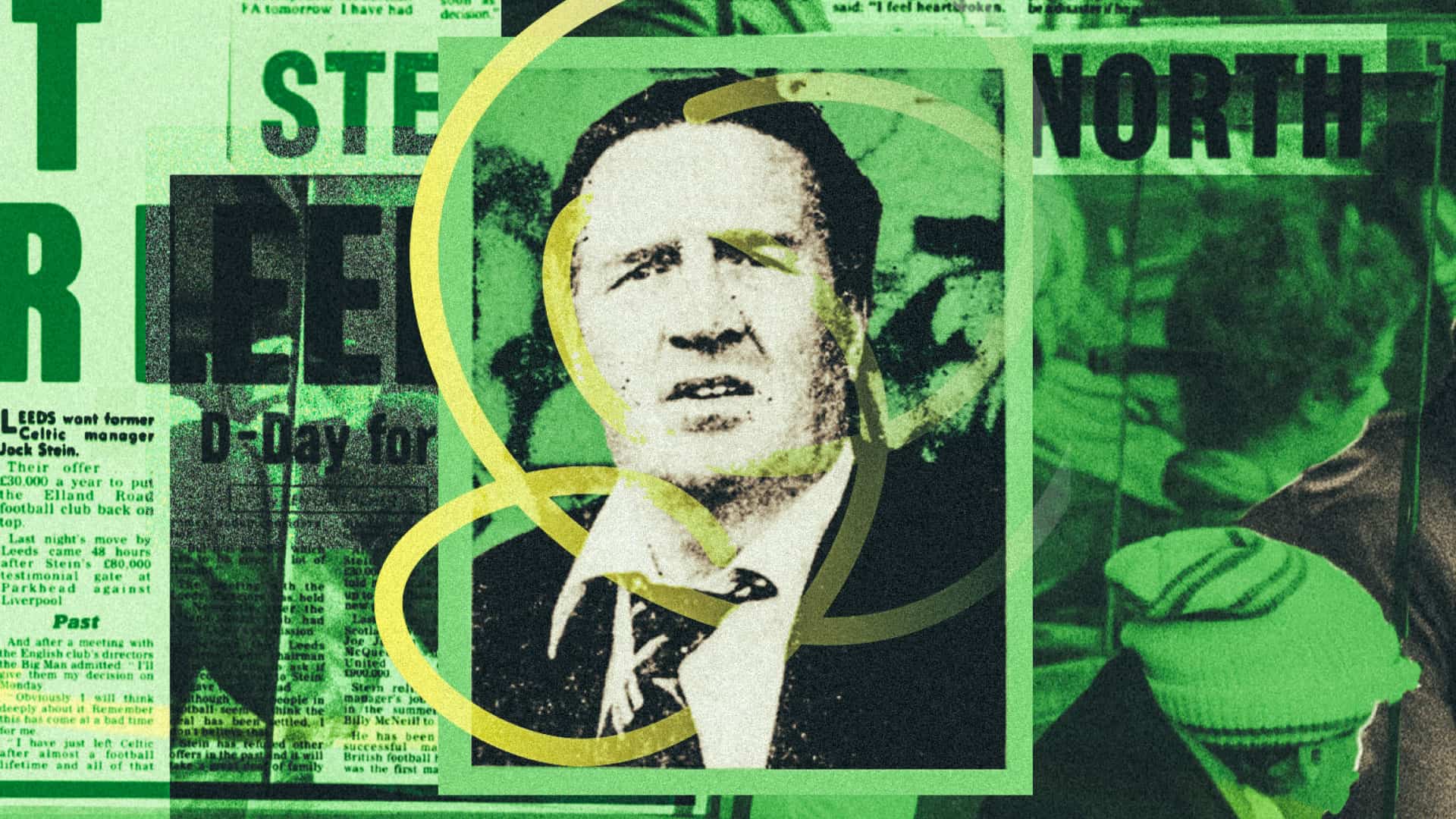
“Nothing in my life has worried me more than this, not even the Brian Clough affair,” Leeds United chairman Manny Cussins said in October 1978. Jock Stein, the manager he’d hired only six weeks prior, had resigned and was heading home to take over as Scotland manager. Leeds fans were left wondering what might have been had one of football’s most successful coaches not left them high and dry.
Two months earlier, Leeds were searching for a new coach, having dismissed Jimmy Armfield at the end of the previous season after finishing 9th in the First Division. They were three years removed from the European Cup final robbery against Bayern Munich and the board felt they needed to make a statement by hiring a coach with enough gravitas to reinvigorate a club in decline.
Their first choice was Lawrie McMenemy, who guided second-tier Southampton to FA Cup glory in 1976. Cussins chased his signature to no avail; with Southampton having now won promotion, McMenemy decided to remain the South Coast and have a crack at the First Division. Leeds’ search for a new coach dragged on, and they began to focus their attention on Jock Stein, who had just left Celtic after thirteen hugely successful years.
Under Stein’s management, Celtic had claimed the league title ten times but, much more importantly, had won the European Cup — the trophy Leeds so coveted — in 1967 and also reached the final in 1970, beating the Peacocks in the semi-final. Celtic had convinced him to stand down at the end of the 1977/78 season after an unusually low 5th-place finish, allowing him to name his successor in his European Cup-winning captain Billy McNeill. They also asked Stein to stay on and manage their pools company, but he believed he had more to offer in the game itself and declined.
A week before the 1978/79 First Division season kicked off, Leeds had no manager and Stein was in Glasgow for his testimonial match against Liverpool, an event that reportedly earned him £75,000 — quite the golden handshake, if true. Leeds approached Stein two days later and presented him with their terms, a three-year deal reportedly worth £85,000 and the promise of £1m to spend on new players.
Stein had already rejected a £60,000-a-year approach from the Kuwait FA to take their national team job and been offered £60,000 a year. After meeting with Leeds’ directors, he asked them to give him the weekend to mull over their proposal. “Obviously, I will think deeply about it,” Stein told the Daily Record. “Remember this has come at a bad time for me. I have just left Celtic after a football lifetime, but it is an offer which has to be given a lot of thought.”
Stein flew to London to watch Leeds’ 2-2 draw against Arsenal at Highbury that weekend and then gave Leeds his answer the following Monday: aye, go on, I’ll take the job. Or something like that. In the time between his meeting with the Leeds board and accepting their offer, some newspapers were reporting that the club weren’t unanimous in choosing him as their next manager, claiming one unnamed director had been pushing for Leeds to appoint someone younger than the 54-year-old Stein.
Cussins was said to have pushed through the proposal at a board meeting on the Monday as Stein accepted the job. The chairman was determined to ensure the move happened after an unsuccessful attempt earlier in the summer to convince the hierarchy at Leeds to sign off on an approach for Ireland and Shamrock Rovers player-manager Johnny Giles, a younger option at 37 but not one without dissenters in the boardroom. Giles had been the man that Don Revie wanted to replace him in 1974, but the board disagreed and Giles left the year after to become player-manager at Leeds.
Stein was thrown straight into it after arriving in West Yorkshire, a home match against Manchester United his first assignment only two days after accepting the job. This clash also meant a return to Elland Road for Gordon McQueen and Joe Jordan, the two Scotsmen sold to their bitter rivals by Leeds earlier that year. McQueen put the away side ahead after ten minutes but Leeds fought back, equalising twice before a later Lou Macari winner meant a 3-2 loss for Stein in his first Leeds game.
“It was not a good start to a long race,” Stein told the press after the defeat. The papers also reported that he had sanctioned two transfers worth £500,000, signalling the beginning of his squad building. While the club worked on new players, Stein set about making it work with the ones he had. He won his second game 3-0 at home to Wolves, before beating Chelsea by the same score at Stamford Bridge the week after. Leeds were on the up, even if they’d drawn twice in the League Cup with West Brom either side of the Chelsea win. Skipper Trevor Cherry wrote in the Telegraph’s ‘Captain’s Corner’ column that Stein would ‘enable Leeds to pick up from where they left off when Don Revie was here’.
There had been reports in Scotland throughout the summer of 1978 that Stein was being considered to take over as their national team manager after that year’s World Cup. Scotland had underperformed in Argentina, crashing out in the group stage, and pressure heaped on their FA to sack manager Ally MacLeod. The association met in early August 1978 to discuss the manager’s future in a meeting that lasted almost five hours. MacLeod was given a reprieve and Stein took over at Leeds two weeks later.
In their first international fixtures since the World Cup, Scotland travelled to Austria in Euro 1980 qualifying. They lost 3-2 and MacLeod resigned immediately afterwards, leaving Scotland needing a manager in late September. Leeds had just lost to Man City and Spurs, while Stein was without key player Tony Currie, who suffered a bad injury in the first League Cup replay against West Brom. The creative spark was gone and rumours were starting to spread that Stein didn’t fancy it at Leeds. Some of his players felt he was simply waiting for the national team job to come up and, if it did, he’d be off.
Around this time, rumours spread that Stein was interested in the vacant Scotland post. The legend goes that he told journalist and commentator Archie McPherson to spread the story in the local media and confirm his interest.
Leeds panicked. Cussins offered a pay rise to £100,000 to keep him at the club, three times his current salary plus a little more for good luck. The offer was doubled to £200,000 if he stuck around for a second year.
Stein hadn’t been successful in signing any players and Leeds’ results had been middling compared to the dominance he’d become accustomed to at Celtic. If he took the Scotland job, he’d be managing players like Kenny Dalglish, Archie Gemmill and Graeme Souness, as well as McQueen and Jordan.
The Scottish media were bullish about the chances of Stein taking the job, while back in Leeds the story was that he’d been house hunting with his wife Jean — in Leeds, not Glasgow. Cussins continued to big his manager up in the media, claiming: “If footballers can be worth four hundred thousand pounds, then Jock Stein is worth four million.”
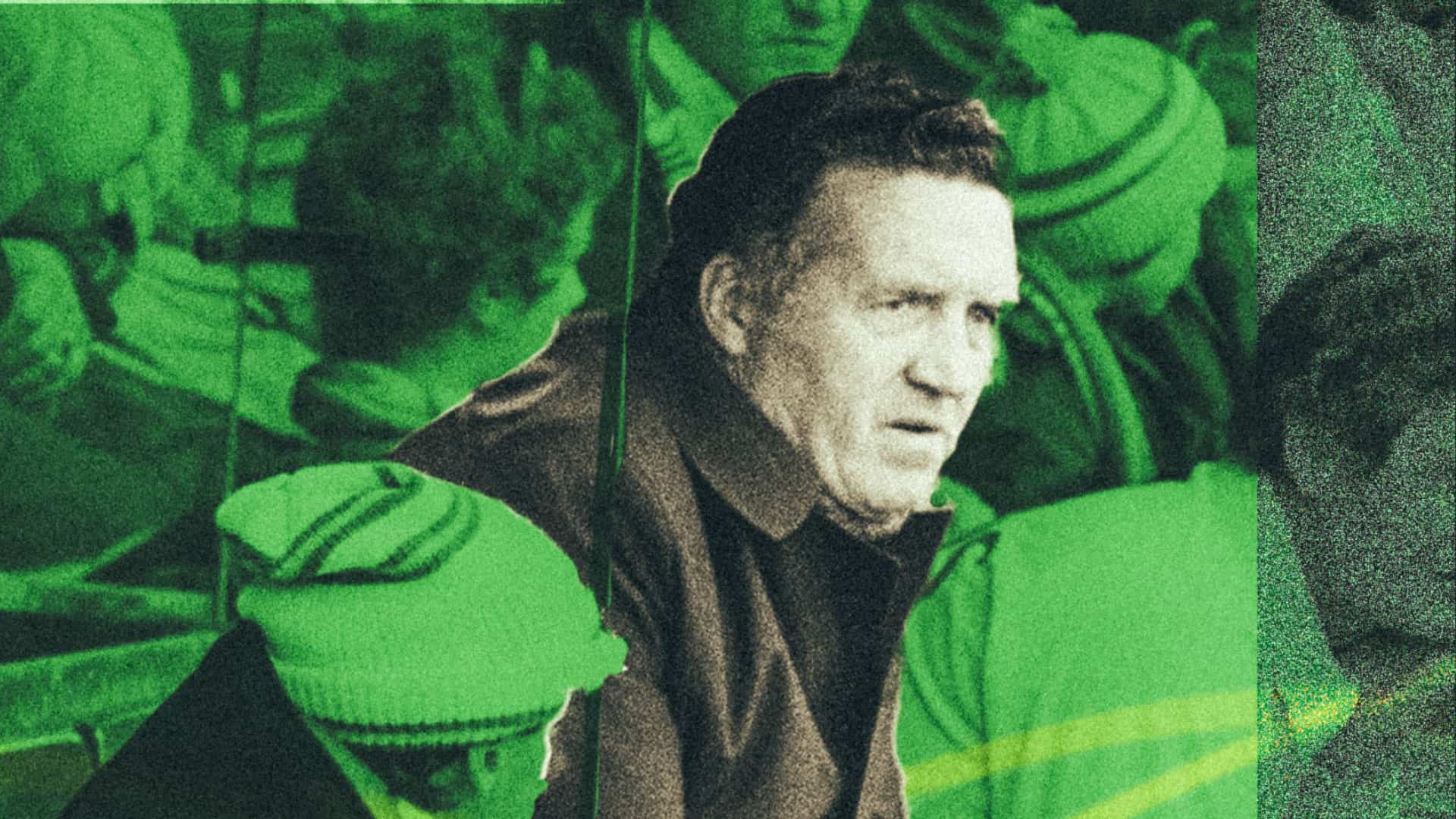
Leeds won 3-0 against Birmingham at the end of September and Stein remained characteristically coy on his future. “The only call I’ve had from Scotland was from my sisters,” he said. Yet two days later he gave an interview to The Observer detailing how he’d shake up the Scottish FA if he was in charge. Leeds claimed to have rejected an approach but by the first week of October it appeared that they were powerless to resist Stein’s move north.
His Leeds contract remained unsigned and, legally, there was nothing they could do. It also meant that the club weren’t in a position to negotiate a compensation package. They weren’t getting one, simple as that. Stein took the Scotland job and left Leeds with nothing only 44 days after taking charge, exactly the same amount of time that Brian Clough had lasted at Elland Road four years earlier.
“It was a difficult decision and I am not the sort of man who can just say, ‘I am moving,’” Stein said. “But I think any manager would want to be manager of their national team. The time is right.” Leeds still asked for compensation, citing that Clough had also not signed his contract before being sacked by the club in 1974 but that hadn’t stopped them paying him off. Unsurprisingly, nothing came of it and Leeds moved on to pursue a new manager for the second time in two months, eventually hiring Jimmy Adamson at the end of October.
Stein left Leeds high and dry, in reality, but failed to garner the resentment or rancour aimed towards Clough after his sacking. Both were the right man at the wrong time, although they left in very different circumstances. Clough was supposed to be the bold and brave successor to Don Revie, a brash manager who would carry his great team forward and do what those players were born to: win the European Cup. But he couldn’t get out of his own way and his ego talked him out of a job within weeks.
Stein was different, and so were Leeds at that time. No longer a European footballing powerhouse, the Leeds United that Stein arrived at in August 1978 was one in need of a renaissance. You can see why he viewed the Scotland job as a more attractive prospect, even with the emotional appeal and patriotism removed.
Under the guidance of Stein, Scotland reached the 1982 World Cup in Spain and were well placed to reach the 1986 tournament when, during a qualifier against Wales in Cardiff, he suffered a heart attack in the dugout and later passed away in the Ninian Park medical room.
He lived a life of football and remains one of the great ‘what ifs’ in Leeds United history. Ten games in charge was never going to be enough to judge the direction in which his team were travelling, but his pedigree as an elite manager and coach, as well as the general enthusiasm in the city around his appointment, meant there was belief that something was brewing.
Once again, Leeds fans were instead left wondering what might have been. Had Stein stuck around for the full season, things might have taken a turn for the better. If he’d been able to sign the players he wanted, Leeds might have slowly made their way back to the top table with one of the game’s great minds behind them. Perhaps the board should have learned their lesson from 1974 and made Johnny Giles their new manager. After all, he was The Brains. ⬢
£3.00

£12.00

£16.00