Limited Time Discount! Shop NOW!
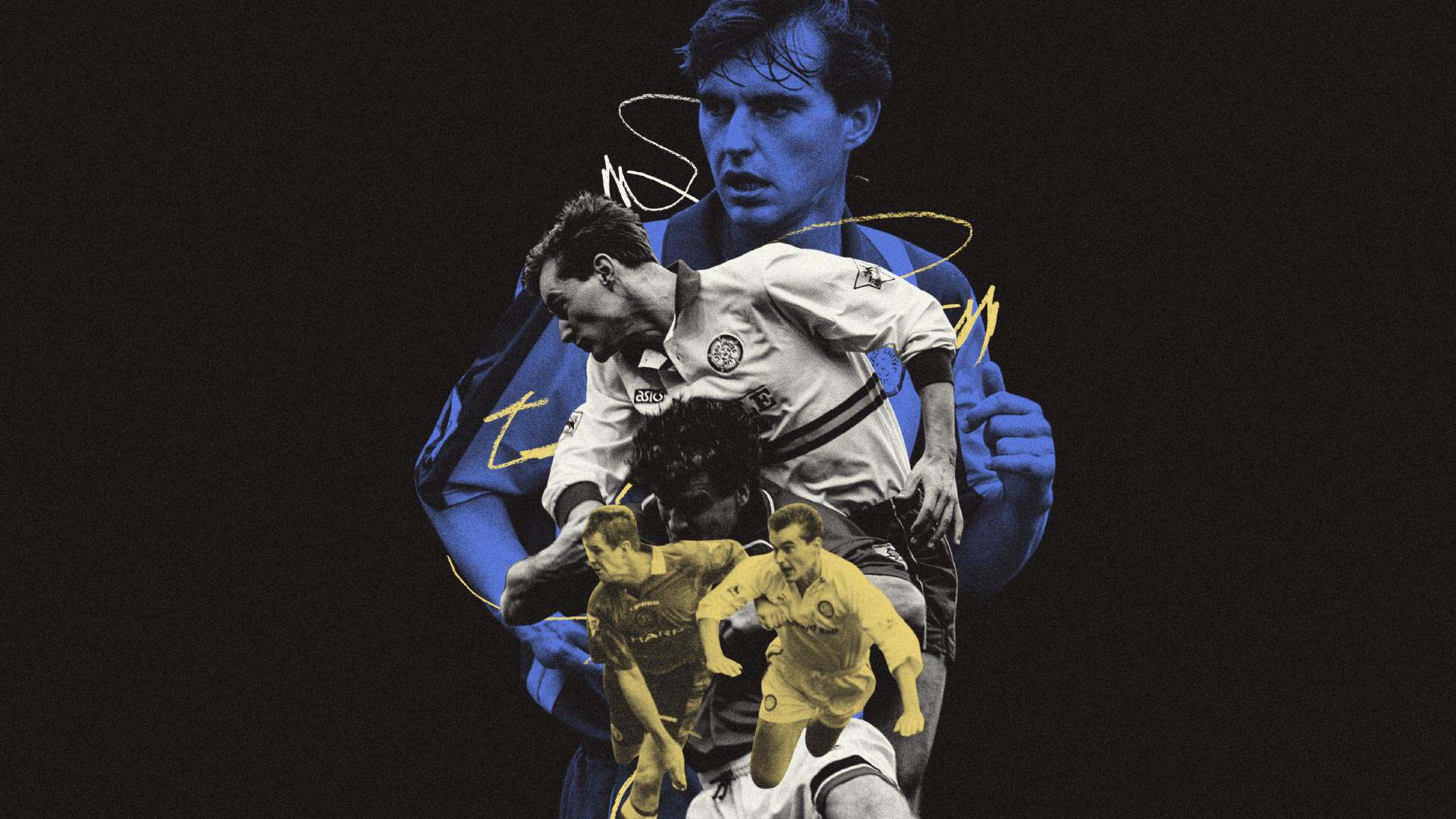
Thirty-six years ago, Howard Wilkinson sat down to talk about Mike Whitlow. Whitlow had waved goodbye to the Northern Premier League and moved to the big time, a Leeds United career that ultimately lasted 77 games over four successful seasons. When Wilkinson was asked about his dependable left-back, he described Whitlow as “a racing car going into turbo”. When I sat down with David Wetherall, this was, of course, essential to discuss. “A what?!” he chuckles. “I haven’t heard that one! Well, I can’t say I’m a Ferrari, can I? Probably a clapped-out old Morris Minor.”
The season David Wetherall left Leeds, Peter Ridsdale decided it was time to dream big. The owner took Beeston’s ambition into his own hands and orchestrated a rebrand of the squad that had led Leeds to the most successful period in the club’s modern history. Leeds had been champions of England, League Cup finalists and European contenders, but Peter wanted more. Peter had seen the dizzy heights of European nights and Peter wanted luxury and stars and fancy private planes. Peter, it seems, wanted a Ferrari.
And that meant a clear out. Gone were the Whitlows and Wetheralls, the stalwarts of our championship-winning campaigns, and in were the new toys. “In fact, it’s probably one of the reasons I left Leeds,” Wetherall says, nearly 10,000 days after his move past the airport to Bradford City. Following 244 games for Leeds and one particularly important goal for Bradford, Wetherall has turned to youth football, where his time for the Whites both ended and began. “Because Woody was coming through, I saw both sides of it. I saw the advantages from the club’s perspective and the downside from my perspective, I suppose.”
Not that it dwindled his love for the game, though, “I work a couple of days a week at Huddersfield Town,” he continues. “I was academy manager at Bradford, and then I became director of youth development at the EFL, which was heading up the whole youth development operation across the 72 clubs, which kept me busy for twelve years. I stepped away from that two and half years ago and at that time Huddersfield were just restarting their academy.”
Presumably because they were shit?
“They’d essentially closed their youth development operation,” he explains, “so the two things aligned. They asked me to go in, advise them if you like, on the start-up and that’s what I’m on to. Couple of other bits on the side, but that’s pretty much it.”
Handed his professional debut by Howard Wilkinson, the brains behind England’s FA redevelopment, Wetherall’s career reflects that of his earliest mentor. “I certainly always recognised the advantages of young players coming through. I always saw that from when I was playing in my days at Leeds, when they won the Youth Cup, beating Man United on that pretty famous night — in youth development it’s famous anyway — so you always recognise the benefits to clubs.
“You have to see what Leeds did there with the players that came through, that was beneficial to the club financially, but also then the fans can really buy into that team and that club — everyone loves to see one of their own coming through.”
At a time, David was one of their own too. Growing up in Sheffield Wednesday’s academy and an Owls household, Wetherall made the move to Leeds before making football full-time, but his relationship with the club began long before that.
“Leeds were the rivals. I don’t actually remember, as a kid, Wednesday playing against Leeds that much, but they were just up the motorway. Sheffield United were always the big rivals, but as another Yorkshire club it would’ve always been a big game when those two clubs met. Before going up there, they were one of the Yorkshire rivals and obviously a massive one.”
It wasn’t long until Wetherall’s allegiance could be tested, pulling on all white for the first time. “My initial debut was coming on in the season they won the league. All down to me, obviously; my two minutes against Arsenal were the deciding factor. I came off the bench. I was going to come on with something like half an hour to go. I was all stripped off on the touchline, numbers ready. We were 2-1 down, then we scored. Which was brilliant, obviously, but I got a tap on the shoulder. Wilko says, ‘Wethers, come and sit down son.’
“Then I didn’t know where I was coming on, didn’t know what position, but with two minutes to go, I don’t know whether he felt sorry for me or what, but he put me on up front. Never played up front in my life before, so I just ran around for two minutes. Two minutes was still long enough, by the way, for Tony Adams to absolutely smash me, as if to say, ‘Welcome to the big leagues.’”
Wetherall’s career didn’t follow the EFL development plan, with a degree in Chemistry at the University of Sheffield top of his priorities.
“Everybody remembers their first taste of senior football and that was it, but in that season I was still in university, I was a part-time player.” One of only two Premier League players with a chemistry degree — the other being Everton’s Barry Horne, the nerd — Wetherall’s hard work paid off, and he started the next campaign among the first team.
Wetherall watched from the bench as the reigning German champions disassembled Leeds in front of him in a Champions League qualifier, a Stuttgart team that soon collapsed when brought back to Beeston. A 3-0 trouncing forced Wilko’s hand, and it was a young David Wetherall called upon to make the difference upon their return to domestic football.
“I think we were away in Europe in the week and then down to Southampton and Howard just told me on the morning of the game, ‘You’re playing, you’re starting,’ which was great. Kerry Dixon was up front for them. People of a certain era might remember him. He scored a tonne of goals at Chelsea, England international. But everything went great.”
A Perry Groves goal set Leeds up for a fourth loss of the season, but Gary Speed’s piercing strike from eighteen yards was enough to save the day for Mr and Mrs Wetherall.
“It was really strange because my parents were still living in Sheffield, but they happened to be on holiday down the south coast and said, ‘Oh, we’ll come and take in the game,’ not knowing then that I was playing and when I started it was just incredible that it fit together from that perspective. I think I was shattered after seventy minutes and I got subbed off, but everything went well, and it was one of those debuts that I took a lot from. I don’t care who you are, every player has that little doubt, ‘Can I do this at that level?’ So to actually get out there and personally everything go well on the day just gave me a huge boost as well as a great day to remember.”
But David’s level went higher, and soon he became one of the regulars in a Leeds United team that toured Europe, with the first stop quite possibly the best.
“Monaco — fantastic experience. We didn’t see much of the place, typical life of a footballer, I suppose. We flew in, got there when it was dark. We didn’t really know where we were, we seemed to be climbing high and I remember getting into the room and just opening the curtains and we must’ve had the best view across Monaco. You’re looking across the bay and you’re thinking, ‘Wow, what a place this is.’ You want to go and explore the place, but you know you’ve got a big game the following night.
“European games throw these experiences at you, don’t they? From a personal point of view, it went amazingly well. Was their centre-forward called Anderson?” Indeed, he was. “I seem to recall they’d signed him for fifteen million or something, which was back in the day an unbelievable amount of money. I’m there as a centre-half, still quite young, not really experienced the foreign game, thinking, ‘What’s this going to be like?’ But it went really well both on a team level and Tony got a hat-trick. I think we managed to keep a clean sheet, did we? Or did we concede one?”
They did keep a clean sheet, and Yeboah’s magic put Leeds into the driving seat. A fumble from the Monaco ‘keeper set him up for a tap-in, where the Ghanaian flipped into an overhead kick for the thrill of it. In keeping with his entertainment, the striker collected the ball from a Leeds throw-in and sprung to his right, parading the full-back around to the edge of his box. Yeboah’s left foot swung, the ball smacking towards the corner flag before coiling back in, past the curly haired ‘keeper and into the top corner. Leeds collected the spoils and took them back to Elland Road.
“Then the home leg was just a new experience. Two-legged ties, what do you do when you’re 3-0 up? Do you go and try and get some more? Do you sit back and just go, we’ve got enough, we’ll just try and make sure we don’t concede? I recall that was a really nervy night at Elland Road, in the second leg, because we were kind of caught between two stools and not really committing to a game plan. I suppose it’s the beauty of European competitions. It was just different to anything else we’d experienced domestically.”
Leeds submitted to a 1-0 defeat, with a deflected strike from the £15m man the difference. Yeboah’s goals made history, but the striker wasn’t always a hero in Beeston.
“I seem to recall the first day he trained. The training ground right next to Elland Road where the carpark is now was a mud bath. We’d had some horrible weather and, honestly, he couldn’t hit a barn door from six yards that day. One or two of us were looking at each other going, ‘What? Who’ve we signed here?’ But he soon changed our minds. What a finisher and a player.
“I was really fortunate that at the Liverpool game, the famous goal, in off the underside of the bar, I had the best view in the house. I was maybe forty yards behind him on the halfway line, but I was right behind it. I had a fantastic view of it, and to see that go in, then we were looking at — wow, that boy can play. Then he repeated it a couple weeks later away at Wimbledon, which was possibly even better because he had to beat a couple of players first. Really, really top striker.”
Soon enough Wilko’s time at the club was over, and George Graham was brought in to call the shots. The ex-Arsenal man was no stranger to dodgy deals, but it was Yeboah’s wages that Graham found troubling. Our glorious Ghanaian threw the shirt, and Leeds threw away any traces of attacking might.
“It might only be an hour every day, but every day you’d set up two banks of four and just go, ‘Come on then, attack us.’ He walked through all of our little situations, from what we needed to do from an organisation perspective, so everybody knew their job from a defensive perspective in the team. We didn’t do that kind of stuff going forwards, but we’d do it from a defensive perspective.
“Also, from the teams that he picked. I seem to recall that he wouldn’t hesitate to pick loads of centre-backs, not to play centre-back, because it’d all be four at the back, but Lucas and Mark Jackson were central midfield for example. Two centre-backs, two defensive — really defensive — midfielders and there might’ve been a centre-back playing right-back as well.
“It was never set up to be attacking in those days,” he says, coming as a surprise to us all, “and it showed, we stayed up, which was the aim in the first season, but I think we did it with the lowest number of goals scored. Not entertaining stuff, and I can see why some people would get frustrated with it, but for playing centre-back in that team you got protection, you’re not left wide open in that team, so I wasn’t complaining too much at the time. I’d complain now if I was paying to watch it, but not at the time.”
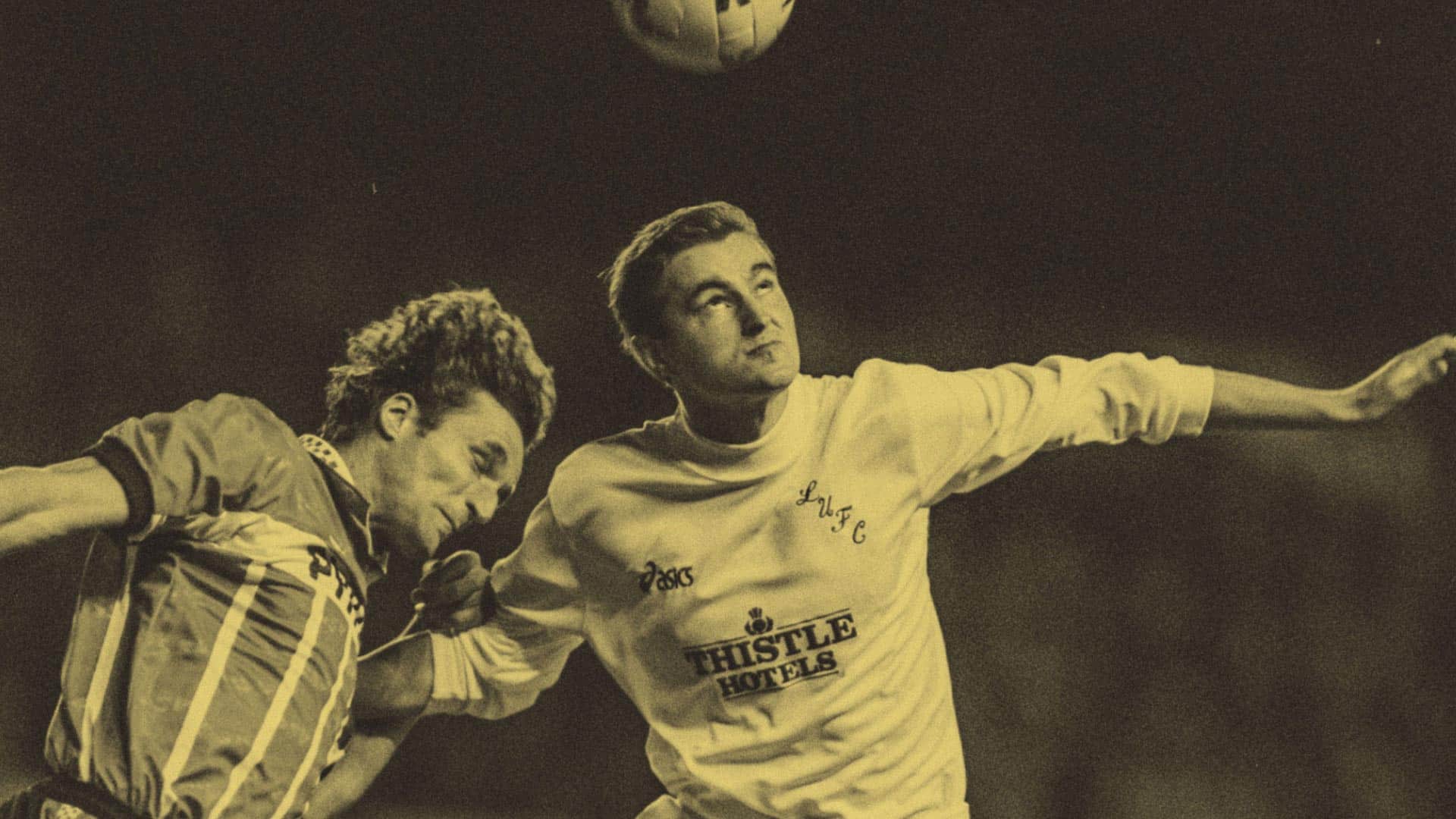
Luckily enough for Wetherall, it was a playing style that was suited to his capabilities.
“When I look back and think about how we used to play, because it’s changed from when I was playing in the 90s, there’s a lot more teams now who will press man for man, and leave it two on two at the back, or even one on one sometimes. Whereas in the 90s, it was more that you’d set up with a back four and one full-back might go but the other one’ll stay, you’d keep your numerical advantage and people would sit in the shape, rather than press on a man for man basis. I wouldn’t have been able to play in a man for man type of team. Just not my strength. My strength was having that bit of protection, making people cross the ball and I’ll head it out, it’s fine.”
This defensive acumen is reflected within a number of the players in Leeds’ current squad, with the shift from more attacking football under Wilkinson to Graham’s solidity reflecting the changes Daniel Farke has made to the current side, too. Key to Leeds’ shifting fortunes is the form of Leeds’ current stalwart centre-backs, with Joe Rodon and Pascal Struijk shacking up a total of eighty games together in all white.
“Joe Rodon looks a really good player ever since he’s been at Leeds. He came in the Championship and you could see he was a Premier League player playing in the Championship. You could see he’s not the biggest but he competes really well. He’s got that pace, he’s got that composure on the ball, he looks a top player. Struijk, you’ve seen him develop at Leeds, he’s been there a while now and you’ve seen him really come through as a pretty young and inexperienced player to start. Now you look at him, he’s looking like a Premier League centre-back. He looks like he’s coming into his prime now.”
During his 244 games at the club, Wetherall played alongside some of Leeds United’s best, and valued the chemistry between his defensive partners.
“I had so many really good partners when I was there. I was lucky enough to play with Lucas. We had certainly a season when George Graham was in charge where we were often paired at the back. Even before that, I remember playing with John Pemberton. We suited each other really, really well; we knew that I could go and attack the first ball because I was stronger in the air and he was really quick, was John, so he could sweep up behind. I would take the big man and he would take the smaller, quick one and that worked well for a time.”
He smiles, “There were so many good players who I was fortunate to play with and one of the most influential, though I don’t think I played in the first team with him, was John McClelland. When I first came to the club, it was Chris Whyte and Chris Fairclough in the first team and John McClelland — RoboCop we used to call him then, since he’d had that many operations — he was brilliant with me. I used to play with him in the reserves, and I learned so much from him, so although that wasn’t in the first team that was someone to really learn from and it was great that he was around, and he was willing to share with me what he knew at the time.”
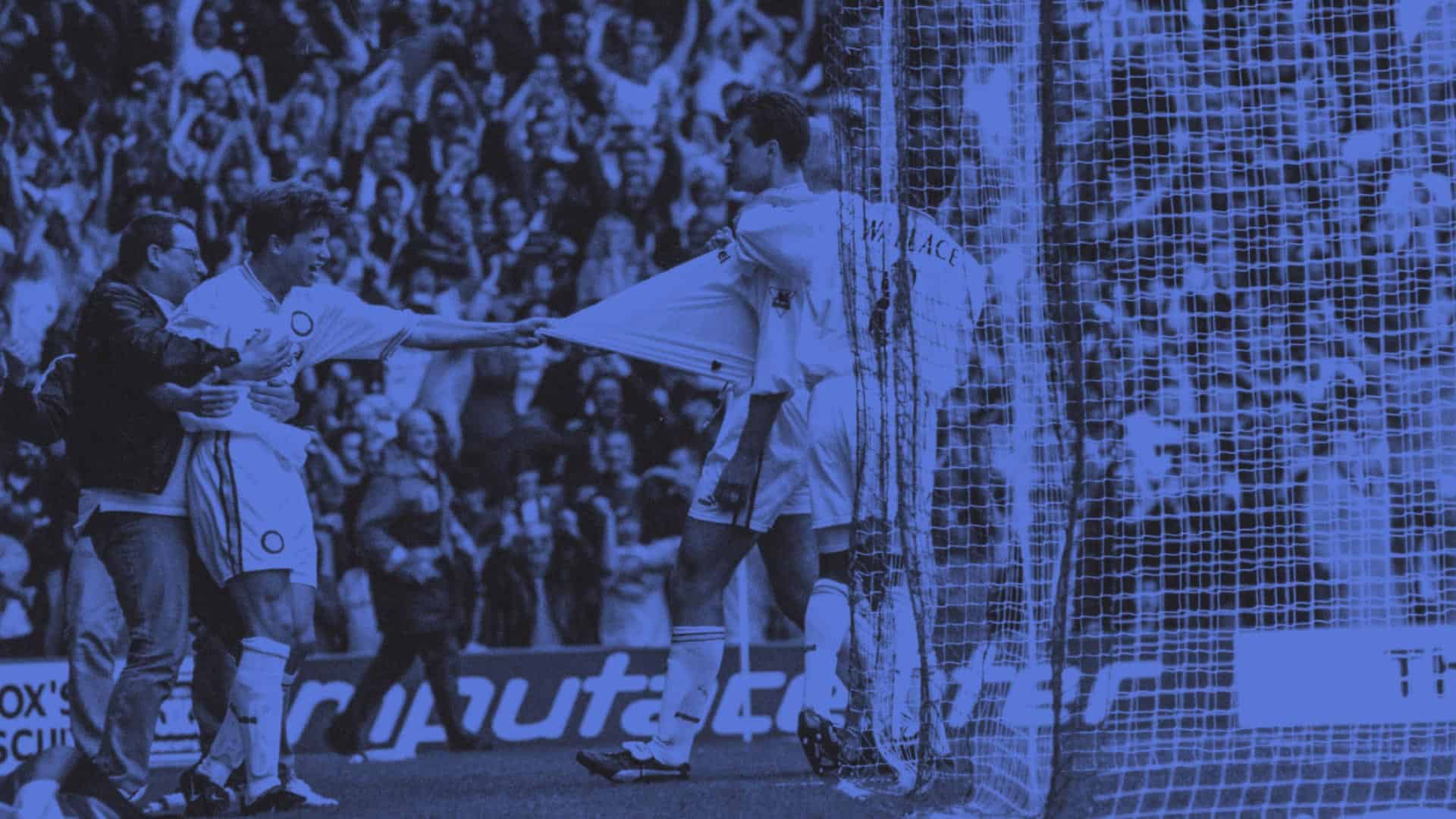
Naturally, it’s impossible to speak to Wetherall without asking him about his goals in two of the Whites’ best wins over the Lancashire lot.
“Someone told me before the first home game against Man United, ‘This is going to feel different.’ I didn’t quite understand what they were talking about. We used to get to the ground really early and have pre-match at the ground, and an hour and a half before kick-off we were just sat around the players’ lounge and then there’s this noise from outside and you wonder, ‘What the hell’s happening out there? What’s kicking off?’ It was their team bus arriving and the Leeds fans were giving out. It was almost like the game had started with the amount of noise, so just from that and the atmosphere when you come out on the pitch, those days were a little bit different. You could tell there was that extra bit there. So to be fortunate enough to score not just once but twice was an incredible feeling and we were lucky enough, fortunate enough, good enough, I suppose, to win a couple of times around that time. They gave us a couple of good beatings as well, to be fair, but we’ll forget about them.”
No, David, we won’t. Because, despite what Peter Ridsdale might’ve thought, Leeds United have never been a club striving for perfection. Leeds have done many beautiful things; conquered Europe, lifted the First Division trophy and even given life to the dull Beeston nights. But behind that, where the real hard work lies, the foundations of beauty are ugly. They are battle hardened and worn, with some muck under their fingernails and a whole lot more on their boots. Leeds United have never been a team clambering for stars, but Leeds United aren’t all ugly, either. Because when David Wetherall left Leeds, we were brilliant. The team came close to achieving greatness; generational moments that would reshape the club and the city forever. It’s a shame, really, that coming close isn’t quite good enough.
I suppose, in the end, Peter got what Peter wanted. Champions League, shining stars and Seth Johnson. In reality, Peter got what he deserved, because a Ferrari might have taken Leeds there quickly, but ultimately the wheels fell off, whereas we could always trust that clapped-out old Morris Minor. ⬢
This article is free to read from issue seven of The Square Ball magazine. Get your copy here.
£3.00
£3.00
£19.99
£3.00