Limited Time Discount! Shop NOW!
It’s 1987. Fifteen-year-old Tom is about to complete a trial period at Leeds United attempting to earn a full-time apprenticeship. It’s a pivotal moment in his life, but he’s also changing as a person, and going through a period of realisation that he’s just not cut out for this. Imagine the emotional turmoil of having a professional football career with Leeds United within your grasp, while also starting to recognise that you don’t want it…
For whatever reason, it was about ten days before we received any feedback on the trial match. Until then, we continued as normal. We even had a couple of training sessions before D-Day came and we heard the verdicts. I’ve watched films and documentaries about apprentice footballers and the journeys they are on. On the traumatic day when they are released, the conversation always happens behind closed doors in a coach or manager’s office. The protagonists are wheeled in individually and often shown in silhouette so that if there are tears and snotty noses, at least there is some dignity, and usually a parent is there to provide a comfort blanket and a shoulder to cry on. In this case, we were told to gather round in the dressing room after a routine training session, and the fifteen or twenty of us present were told our fates in front of our peers, unprepared and unsupported. It felt like being paraded naked in Schofields shop window for everyone to see, but it was delivered with the insouciance of taking a morning register at school. Suddenly, I felt vulnerable and exposed, and of course, I had a foreboding of doom.
The coach read out the names of those who would be offered apprenticeship terms. My name wasn’t on it. I knew it wouldn’t be, but it was still horrible to be confronted with such a resounding hammer blow in that environment. While six or seven players fist-pumped the air and grunted a “Yes!”, the rest of us remained slumped on the dressing room benches, elbows on knees, chin resting in the cradle of our open palms, and in my case, just wanting a hug from Mum and a slice of Battenberg. No one congratulated the players who had been successful, and no one consoled the players who hadn’t. No one said anything. After all, we didn’t know each other. The faces in that dressing room had changed a lot over the sixteen months I’d been in it and I hadn’t got to know anybody. We were like people filing through a department store and this moment was just a snapshot in time. There were no attempts to foster a team spirit, and hence, there were no relationships. I look back on it now and realise I should have done a lot more to fit in, and it may just have made a difference. I’d developed a lot further into the ‘professional football system’ than a lot of young kids had, and with a little bit more effort, I could have made it. But by then, I knew I didn’t want to. We all silently got changed, our minds inwardly racing but outwardly showing no emotions whatsoever, and sloped off in our individual directions like ships in the night. I don’t even know whether that dressing room contained players who went on to make it elsewhere. There was certainly no one who made it at Leeds United, and I didn’t recognise anybody when I later watched games on TV or read Match Weekly or Shoot. But who knows who those kids were? We were paraded cattle. I’d been just another number on another row.
Bizarrely, we had another couple of training sessions after the announcement. There was a coaching programme we had been following, apparently, and that needed to be seen through. This was for the sake of our ‘future careers’. At this point, I first considered the idea that maybe I could play professionally for another club. I didn’t entertain it at the time, but as the months went on, I came around to it, essentially because I had not a single clue what I was going to do when I left school. After the final training session, the coaches did give us a bit of a pep talk and thanked us for coming – a ‘good luck in the future’ kind of send-off. I remember feeling quite bitter, thinking they probably did not give a single fuck where any of us ended up. It was a bit late to be feigning concern for our individual development. But, as I gathered my kit off the peg of the Fullerton Park dressing room for the very last time, something really unexpected happened.
Amid the shuffle of exiting feet, the coach announced that a special visitor was coming to say ‘well done and thanks’. A lot of the lads ignored this and left, but I thought I’d hang around, mainly because I had about half an hour to kill before my bus home, but also because I was still a teenage, star-struck Leeds fan, and who knows who this special visitor could be? There were only about ten of us left by the time Billy Bremner walked in. Suddenly, this dark and lonely dressing room, which for sixteen months had generated all the joy of a special correction unit, took on the brilliant sheen of a utopian idyll. Bremner shone like the North Star. He gave us roughly the same pep talk as the coaches had, but this one meant about a million times more and I hung on every word. He made eye contact with all of us, and addressed everyone one by one. He even knew some of our names. I couldn’t believe it. How did Billy Bremner know who we were?
“Tom!” he barked at me, without warning, in his perky and unmistakable Scottish drawl. My heart leapt and a shock of electricity ran through my body from head to toe. “You’ve got a bit of everything in you. You’ve got it son. You just need to channel it in the right way. Believe in yourself, keep your head up and you’ll make it. I think you need good teammates around you, and in the right set-up, you will definitely make it, son.”
His words landed like they were being delivered into my skull by a mortice drill. I’d heard his voice so many times on YTV and Radio Leeds after epic Leeds United matches and even more recently as the club’s manager. Now he was talking to me, and he even knew who I was. Bremner was dressed in a suit and brown patent leather shoes, but there was a muddy ball on the floor and he started rolling it about under his foot and then doing keep-me-ups and drag-backs with it as he talked. He completely transfixed everyone. It was like witchcraft and we were under his spell. Then he broke off and said:
“Come on lads, I’ll give you a quick tour of the ground before you go. Tom!” he pointed at me and beckoned me over like the hand of God poking through the clouds, surrounded by exploding thunderclaps.
“Come on son, I’ve got something to show you.”
We all shuffled out and Bremner led us down the side of the training pitches, his shoes squelching in the mud and splattering the trousers of his shiny pinstripe suit. We were soon across the car park and within the inner sanctum of Elland Road for the first time in sixteen months, feeling the comfort and familiarity we had always yearned for, on our very last day at the club. He showed us the dressing rooms, trophy cabinet (yep, there was one), chairman’s lounge and boardroom, and some of the offices. He also led us down the tunnel and on to the side of the Elland Road pitch. Billy Bremner, that is, led us down the tunnel. The diamond floodlights somehow looked even taller from this vantage point, and it felt like the tops of them were literally in space. There was too much to take in, it was like a transcendental nirvana, and I was completely unprepared for it. The tour took about ten minutes probably, but it felt like thirty seconds. We were back outside reception, in front of that gloriously resplendent blue façade, and Bremner was saying his goodbyes. All the remaining lads were quietly shuffling off into the cheerless Beeston afternoon, but then he reached out and put an arm round my shoulder and took me to one side.
“Tom, I’ve got something for you. Come with me.”
He didn’t waste a syllable. Every comment or instruction was right to the point. I imagined this was what made him such a great captain and leader, but then again, he had much better things to do than talk to me, so why waste a second more than necessary? I followed him inside, half-running to keep up and half trying to take everything in. We hurried through a maze of corridors and eventually into his office. He told me to sit down. His office was tiny and unsophisticated. There were piles of paper scattered all over his desk; an overflowing ashtray and half-eaten apple stood up in the middle of it.
“I want you to have this, Tom. Use it as a motivation.”
He shoved a small velvet bag into my hand and I instinctively opened it at the drawstring. There was a shiny silver medal inside. I clumsily retrieved it with my still mud-stained fingers before realising it was probably quite valuable. There, in all its non-glory, was Billy Bremner’s loser’s medal from the 1975 European Cup Final. It had a small inscription on one side detailing the game and date, and rather too unambiguously, clarifying that this was a LOSER’S medal. On the other side was a small UEFA emblem etched in whatever metal it was made from. I was speechless.
“Thanks very much, Mr Bremner,” I gasped in open-mouthed awe, standing there in my pauper’s tracksuit alongside this footballing demigod and probably looking a bit like Oliver Twist had he received a European Cup Final loser’s medal rather than a bowl of gruel. I certainly wasn’t going to ask for more.
“Look after it son. It means a lot to me, but it might be more useful to you. I’ve watched you; you’ve got something. Never give up, aye lad?” It took me a moment to realise he’d sort of asked me a question by the tone of his voice.
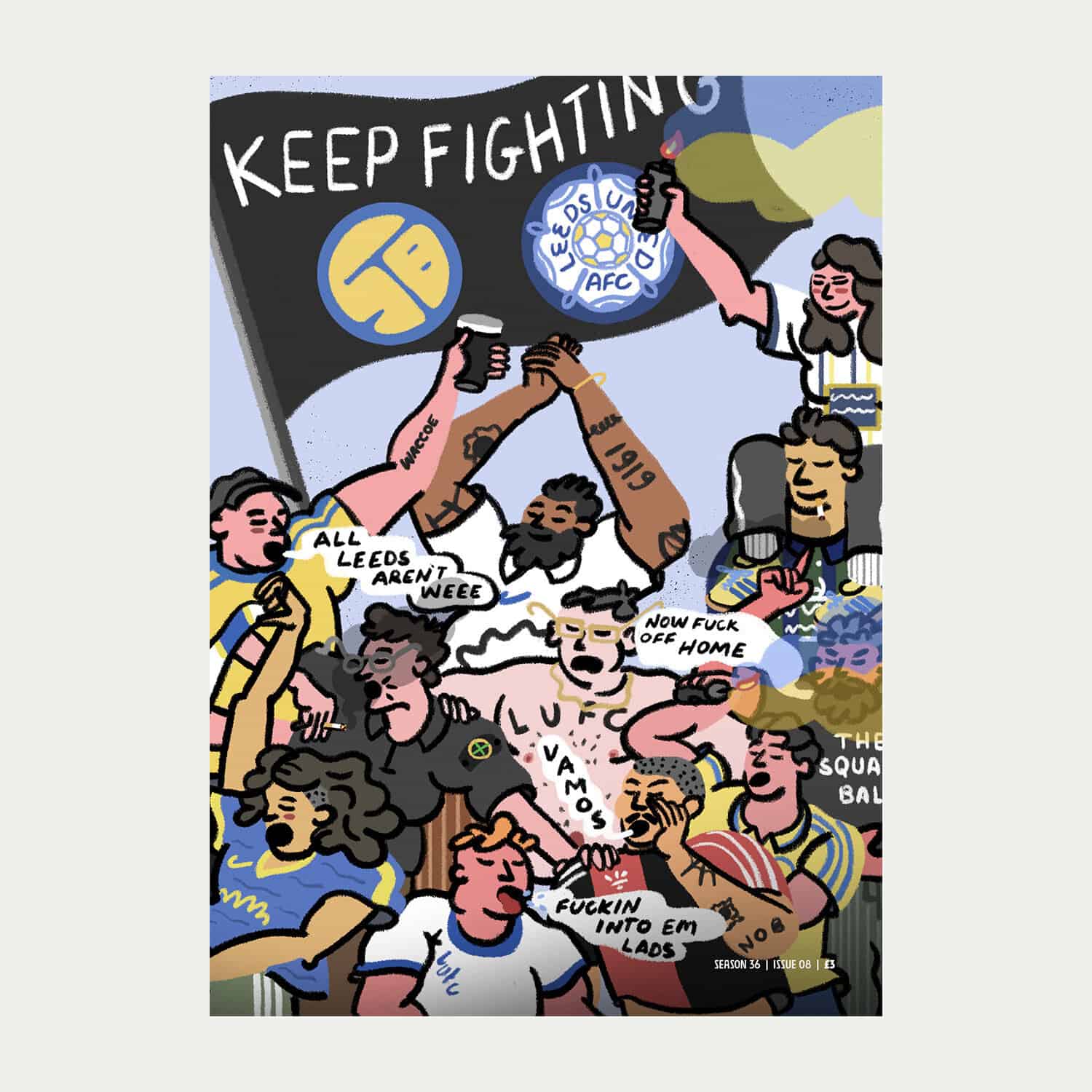
“Aye, thanks, Mr Bremner. I won’t. This is amazing. Keep fighting.” I’d never said ‘aye’ in my life. Or ‘keep fighting’. I had no idea where either had come from, but these felt like completely natural things to say in this quite psychedelic situation. He grinned and playfully shook his fist at me, replying with a “Keep fighting!” of his own. For that brief moment, we were two hardened warriors, united on the same battlefield: the rotten stench of Paris 1975 in our nostrils, an insatiable hunger for revenge in our hearts. And then, just as quickly, he gestured for his secretary to show me out through the rabbit warren of the West Stand. Seconds later, I was standing back in the car park with my bag on my shoulder and the medal in my hand, like I was Mr Benn stepping back through the changing room door in the fancy dress shop and not quite believing what had just happened. On my last day as a footballer at Leeds United, having been rejected in an exceptionally cold-blooded manner, I felt more attached to the club than ever. ⬢
This is an extract from Jon Howe’s excellent debut novel, Days Of Treacle. Signed and personalised copies are available to buy through The Square Ball shop here.

£3.00

£12.00
£16.00