Limited Time Discount! Shop NOW!
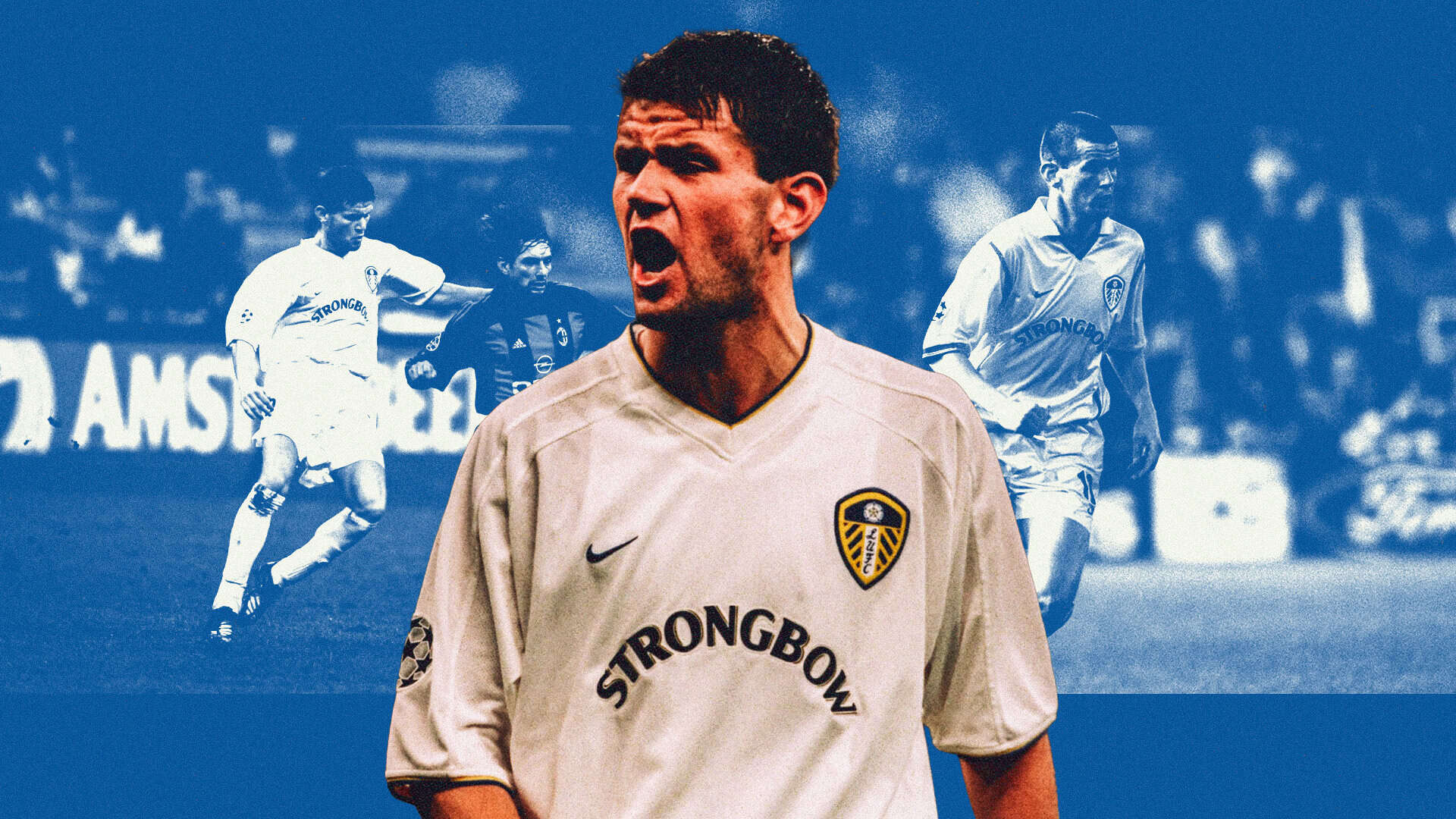
Eirik Bakke is running through the contenders of who might have been the best footballer he faced while playing for Leeds United in the Champions League. As he tries whittling it down to one name, his shortlist only gets longer.
Barcelona’s Rivaldo is the first player to come to mind, but then Bakke remembers the Lazio team that Leeds beat in Rome: Diego Simeone, Pavel Nedved, Marcelo Salas, Hernan Crespo, Alessandro Nesta. But what about the AC Milan side with Alessandro Costacurta and Paolo Maldini at the back and Andriy Shevchenko up front? Leeds beat them, too. Then there’s the Real Madrid team of Iker Casillas, Roberto Carlos, Luis Figo and Raul. By the time he’s finished, Bakke finally draws breath with the giggle of a kid who has just completed his Panini sticker book.
If it’s hard to believe now, imagine how Bakke felt 25 years ago. Only eighteen months earlier, he’d been playing in front of a couple of thousand fans in Norway. Bakke had been relegated with his boyhood club Sogndal in 1998, only to be plucked from relative obscurity by Leeds a month into life in Norway’s second division, moving to Elland Road in a £1.75m transfer.
“It was a big step for me, of course,” Bakke says. “I played in the European Championship for Norway Under-21s, that’s where Leeds saw me. It was a big change, football-wise, culture-wise.
“When I joined I came off the bench a few times and then Batts got injured. I got a chance to start for the first time against Newcastle at home. Waiting in the tunnel with 40,000 people in the stadium, I was nervous. But I played with some great players, so that made it a lot easier for me. There were great young players around me and also experienced players like Lucas Radebe and Gary Kelly. It was a good mix which made it easy to come into the group.
“I had Alfie Haaland there in my first year as well. Off the pitch he helped me develop, coming from Norway. That helped me a lot when he was there. It didn’t make the changes outside of football feel too big.”
For all the nerves around making his full debut, Bakke quickly proved that Leeds were onto a good thing in that 3-2 win over Newcastle. As the Yorkshire Evening Post noted in their match report, ‘The tall, dark-haired Scandinavian possesses an air of nonchalance belied by unrelenting determination, an unswerving commitment in the tackle and a finely-tuned eye for an opportunity, emerging as a player who will take high ranking in manager David O’Leary’s squad system.’ By the end of the season, Bakke was Leeds’ Young Player of the Year, heading for Euro 2000 with Norway and the Champions League with United.
The tournament experience with Norway provided useful preparation for Bakke’s upcoming European campaign with Leeds. In their opening game of the Euro 2000, Bakke played the full ninety minutes as Norway won 1-0 against a Spain side full of Barcelona and Real Madrid stars. Yet for all the excitement and anticipation, Bakke was briefly left fearing he might not make it to the Champions League after all after being sent off alongside Olivier Dacourt in the first leg of the qualifier against 1860 Munich at Elland Road.
“It was crazy,” he says. “I got a second yellow and then Olivier also got sent off. We were 2-0 up and then they scored at the end. Even though we won away from home in the second leg, it was fine margins. It was the same when we qualified the previous season. It was so close, needing Bradford to beat Liverpool when we drew at West Ham. There was a lot of champagne on the bus home, and a big thank you to David Wetherall for scoring for Bradford against Liverpool. He was a typical Leeds boy.”
After missing the chastening 4-0 defeat in the Nou Camp in Leeds’ opening match of the Group Stage, Bakke was straight back into the team upon his return for a famous victory over Milan at home, Lee Bowyer scoring a late winner as Dida spilled his shot over the goalline in the torrential rain.
Bakke remembers the night as quite possibly his favourite game of the entire run to the semi-finals. But like trying to name the best player he came up against, he’s spoiled for choice. The following week, Leeds thrashed Besiktas 6-0 at Elland Road, Bakke getting on the scoresheet with a sweetly struck shot from the edge of the box into the far corner.
“We had around ten players missing for the Barcelona game that I didn’t play in and we were around the bottom half of the league. But then we got players fit again and we got going. With that team as well, we played our own game. We didn’t care who we were playing. We thought we could beat anyone.”
Bakke admits Leeds struggled to balance going toe to toe with some of Europe’s finest alongside consistency in the Premier League. “It killed us the first part of the season,” he says. United’s league form was exemplary in the New Year, losing just twice across the second half of the campaign. The first half was far scratchier, with eight defeats ultimately undermining their attempts to qualify for the Champions League once again. Perhaps that explains why he got slightly carried away by the famous 4-3 win over Liverpool at the start of November and, alongside Dom Matteo, was given a bollocking by David O’Leary for overdoing it on a night out celebrating. Four days later, Leeds had a rather big game in the San Siro, and Bakke was under pressure to perform.
“Eurgh, fucking hell,” Bakke sighs at the memory. “I was scared. We were going out and I think me and Dom were probably out later than everyone else. We had a day off and then when I came in I saw something was wrong. I went to the hotel and David O’Leary took me and Dom to one side. Dom said he’d just had a couple. I didn’t say anything.
“He said, ‘You two better perform tomorrow.’ Dom did that, he scored his famous goal. Of course there was pressure, but he didn’t punish us. That was a big strength. He didn’t punish the players, but he pushed us all the way. If you went over the line and didn’t perform then there was probably trouble for you. At least we got the result. I think we had a good night after the San Siro in the hotel in Piano Bar. We were all happy then.”
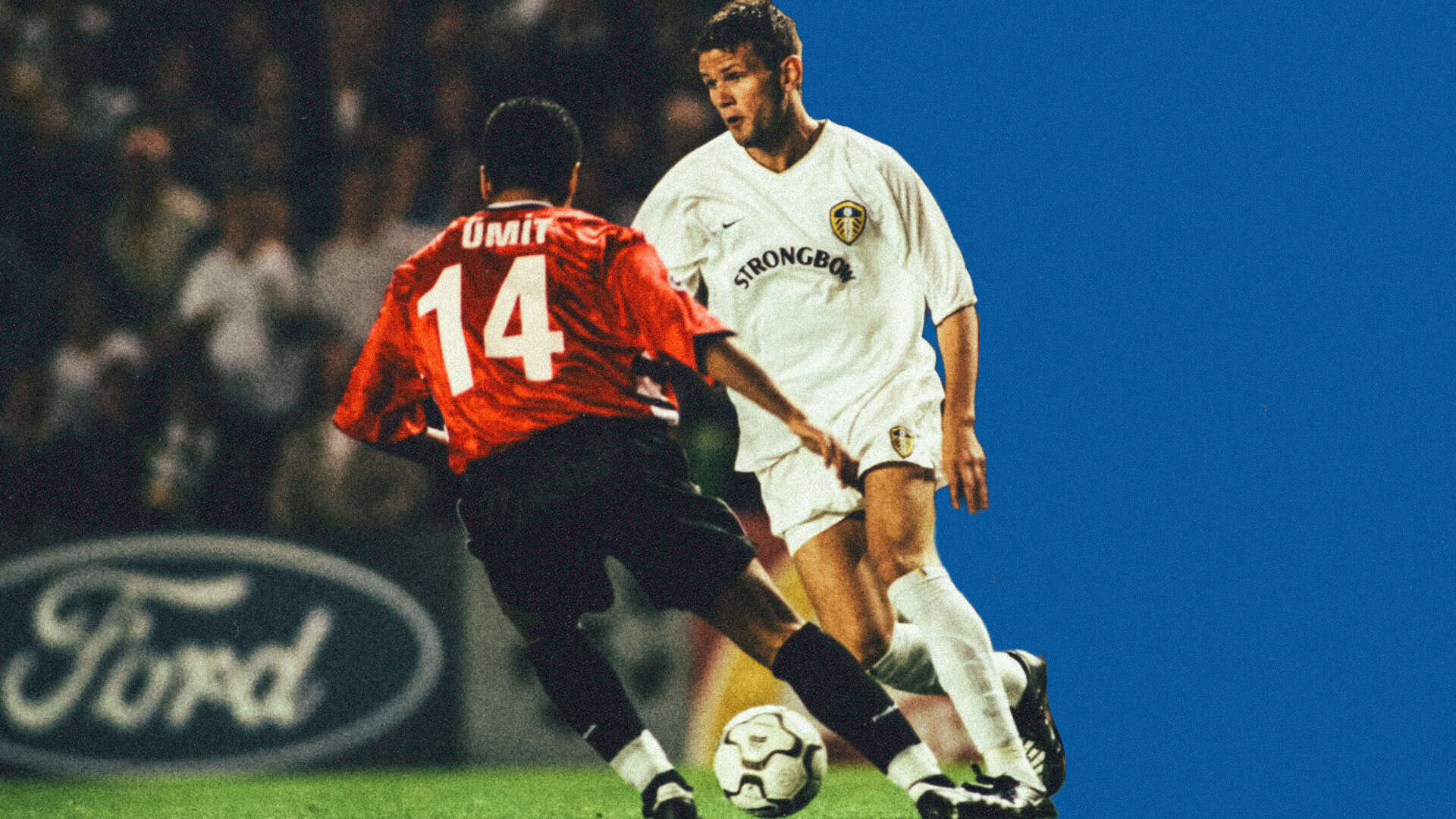
As with lots of things, looking back it’s easy to suggest that Leeds’ freewheeling nature was their greatest strength and ultimately their greatest weakness. Perhaps it was always destined to end in disaster. But for a time, Leeds United had a swagger few teams could live with — even if opposition sides often only realised too late.
First there was Anderlecht, whose manager Aimé Anthuenis described Leeds as “very average” ahead of back-to-back fixtures between the two teams in the second group stage. Even after Leeds won the first, 2-1 at Elland Road, Anthuenis doubled down on his assertion, insisting Anderlecht deserved to win 1-0.
Bakke bit back in the press. “I’m not sure what dream world he was born into,” he said, “but quite obviously he isn’t from this planet.” Struggling with a thigh injury, Bakke also promised to have fully recovered for the return trip to Belgium the following week. “I’ll be perfectly fit to go hunting for scalps.”
Anderlecht had won their previous 21 games at home, including Champions League victories over Manchester United, Lazio and PSV, with another triumph over Real Madrid still to come. Yet Leeds made a mockery of that record, annihilating the hosts 4-1 with a virtuoso performance capped by a sublime team move that allowed Alan Smith to make it 3-0 before half-time with a dinked finish over the goalkeeper. Watching from the sideline as assistant manager, Eddie Gray later wrote in his autobiography that it was the night ‘that most reminded me of the team I played in — at that moment I was transported back to the Revie era. Batty could easily have been Billy Bremner or John Giles, and Smith was a dead ringer for Allan Clarke.’
Upon reaching the quarter-finals, Deportivo midfielder Victor clearly hadn’t been paying attention. He welcomed the draw, describing Leeds as “the weakest team in the competition”. Bakke again made his feelings clear publicly. “Victor can say what he likes — he is only saying what Lazio, AC Milan and all those teams said about us, and look where they are now, out of the tournament.” Leeds devoured the reigning champions of Spain 3-0 at Elland Road in the first leg.
“That’s what I think was the strength of our team — with Eddie and the gaffer they just let us play our own game,” Bakke says. “They didn’t use a lot of time on the opponents, they just believed in us that we could beat anyone.
“That was the best thing about that team. It was so young and we were so hungry to just go for teams all the time. It didn’t matter if it was away from home, we used to play a high pressure game with Alan Smith and Mark Viduka up front. We were hard to play against. We had so many different types of players in the team, and on and off the pitch it was a big success. We were just a group, together, and fighting for each other.”
The second leg against Deportivo was far less comfortable, however, as Leeds fell 2-0 behind with twenty minutes remaining but held on to set up a semi-final against Valencia. Bakke was an unused substitute in the first leg, a goalless draw at Elland Road, but was jettisoned into the team at the Mestalla after Lee Bowyer was banned on the eve of the game for a stamp on Juan Sanchez that went unpunished at the time.
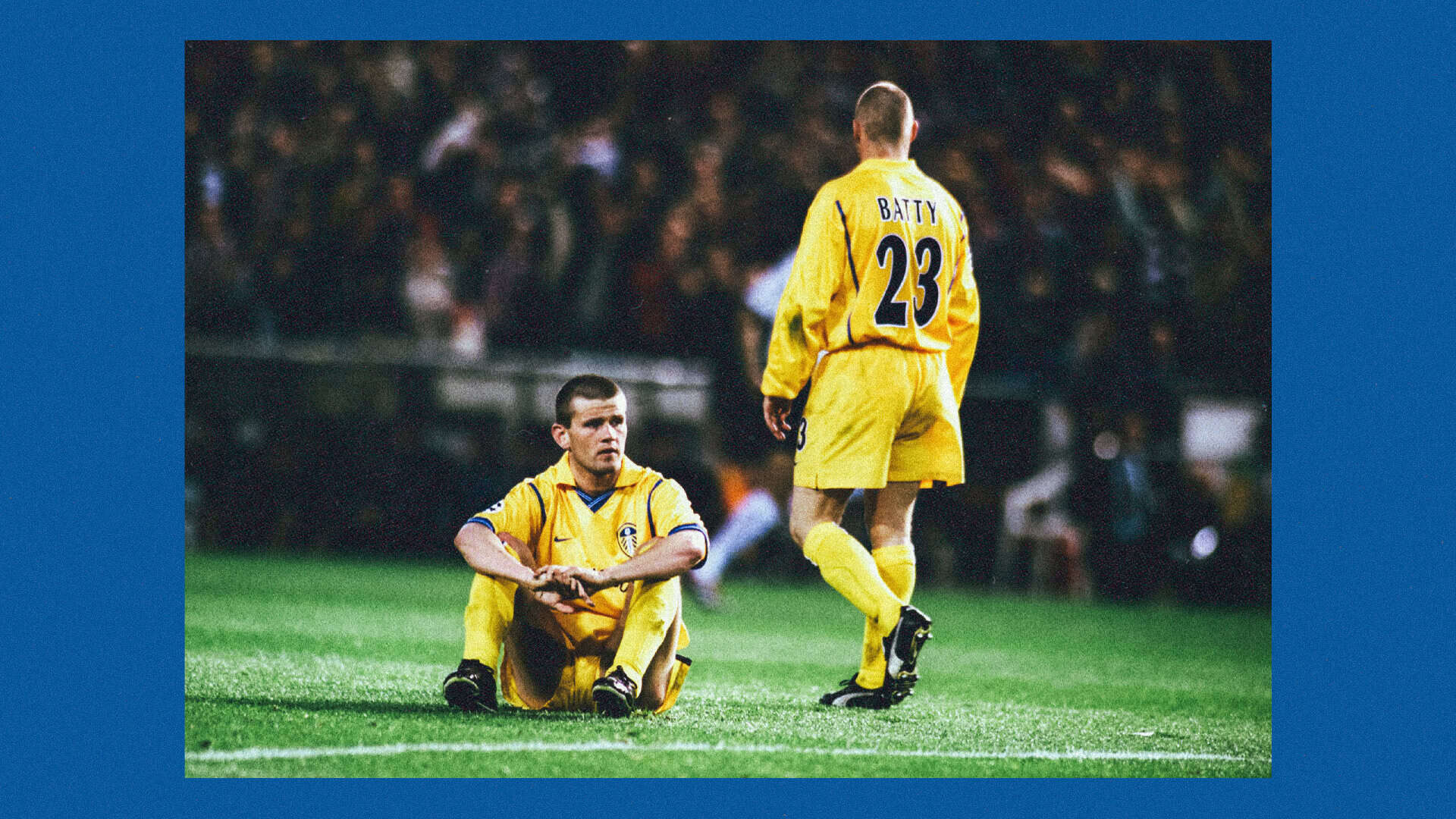
Remembering the 3-0 defeat that night, the frustration in Bakke’s voice is still evident 25 years later as he wrestles with that classic Leeds United question, ‘what if?’, not least because Valencia’s opener went in off Sanchez’s arm. In truth, for all the wild nights and spectacular victories, it might be his defining memory of the entire season. At the start of our conversation, Bakke had semi-joked, “In football, I remember all the bad things, I don’t remember the good things. You know, all the regrets,” and now we’ve got the point of the interview where we can’t avoid it.
“I think we could have beaten Valencia,” he says. “That was the biggest disappointment because at our best we could beat anyone. But we didn’t have our best night and everything went against us.
“We were so close to a Champions League final. We probably should have won at home. It’s still tough to take because we were so close. Even though it was 3-0, I don’t think it was a 3-0 game.
“When Lee Boyer got suspended I had to play on the right side of the midfield. I was more like a central midfielder; of course, I could play on the right but Lee Bowyer was special for that team, he was something extra. If he’d have played maybe I wouldn’t have played because Batts and Olly Dacourt played many European games.”
Bakke snaps himself out of the anguish. “We still have great memories for everybody. 25 years ago, fucking hell.” And his mention of David Batty gives me the excuse to change the subject and ask if he has any David Batty stories.
“It’s a funny thing, we’re all in a WhatsApp group together and we are all always asking, where’s Batts? Are you there? But he’s never replying.
“He’s a great character. I just remember when I came into training, one of the first weeks, you know, he’s always had a comment on everything. When he passed the ball in training it was like a shot. In England it’s passed hard and he was the one who smacked the ball so I could barely touch it. It was, welcome to England.
“He was a funny character but quiet. One of those, very liked by the players. I don’t know how to describe him. With him and Jason Wilcox and the boys there it probably wasn’t easy for the physios to be around, let’s say that. He was always up to some fun things. And when he went on to the pitch, he was so hard. He’s a tough guy, and you can always rely on him. He’s a great guy, one of many.”
Since retiring as a player, Bakke has worked as a manager in Norway, initially back at his boyhood club Sogndal, followed by a short spell at Lillestrom and finally Åsane, taking with him lessons from the coaches he worked under. While he mentions David O’Leary’s man management, he has special praise for Eddie Gray.
“I learned a lot when I came there from Norway. The first pre-season we were split into different groups, with the strikers and midfielders and the defenders, and we were running around the path for two hours.
“Eddie Gray was in our group right at the front. He was 50, and he was so fit and just kept going. He pushed us all the way. I didn’t know I had it in me. I’d never pushed myself that much. After two or three days I couldn’t walk. The mental stuff, I think I learned a lot from them. How to push yourself and believe in yourself and your own team.
“But Eddie as well was so tough on the young players. He knew it was a group coming up and he didn’t give us any slack even though we were winning and everything. He was never happy, you know. He was happy when we won the game, sure. But he knew, because he’s been there, what Leeds is like and how you can get carried away. He was keeping us on our toes all the time, especially with so many young players.
“In that team I think that was very important. He played a big part of course together with the gaffer, the way they conducted those players because it wasn’t an easy group to handle.”
Only a few days before we spoke, Bakke, now 48, stepped down as manager of Åsane, eager to spend more time with his family who were a four hour journey away. Every summer they travel to Dubrovnik, Croatia, where he occasionally reunites with Mark Viduka and reminisces about their time together at Leeds. Having just watched Leeds beat Nottingham Forest from afar, he’s also excited for more opportunities to get back to Elland Road.
“I don’t just remember the bad nights. Of course I remember many good nights. The best nights I remember are at Elland Road, late kick-offs when the floodlights are on, it’s raining maybe. It’s that time when the atmosphere at Elland Road is electric.
“I knew when we played Forest we were going to win because all the Leeds fans are so much louder. When you get a twelfth man behind you then it’s hard to play against. At least if you go against teams.
“I think back to those European nights like against Milan at home. Teams feared playing against us because we went after them. It was something special to be a part of. Of course going to big stadiums was great, but nothing compares to the atmosphere at Elland Road and those European nights.” ⬢
This article is free to read from issue six of The Square Ball magazine. Get your copy here.
£3.00
£19.99
£3.00