Limited Time Discount! Shop NOW!

I wasn’t in Leeds or Sheffield on 26 April 1992. I was sitting in the living room of my parents’ house in Ruabon, north Wales, watching Leeds beat Sheffield United on the telly. Later, I watched the Liverpool vs Man United game and was happy that Ian Rush, a Wales international and my favourite player at the time scored one of the goals that ensured Leeds United were champions.
I’d only ever been to Elland Road once, I stood in the away end alongside a student pal who was a big West Brom fan, bloke called Adrian Chiles. We’d driven up from uni in London. Leeds won.
By this time, I was a fledgling journalist, just coming to the end of my first year in the business. I was working as a news reporter for BBC Radio Cumbria, living in Barrow, travelling home every weekend, covering the occasional game of football for a local commercial radio station under a pseudonym so the Beeb didn’t find out. I’d be watching the two matches while preparing to head back up the M6 for the dreaded drive across the A539 to Barrow.
What did I know about Leeds this particular afternoon, as I watched the TV images coming in of a few of the players reacting to becoming champions in somebody’s front room? Well, not an awful lot. I knew a few of them by sight but I’d probably only seen one play in the flesh, a lad from the same part of the world as me, Gary Speed. He was an up and coming star of the national team, one to join the ranks of Rush, Southall, Ratcliffe, Hughes and Saunders. As a Wales supporter, someone who’d started following the team home and away, I was a big fan. We were the same age. I was taking the first steps to building a career in broadcasting, Gary had already bagged a Championship medal.
Three months later, I was hanging around in the tunnel at Wembley hoping he’d say yes to my request for an interview after Leeds had beaten Liverpool in the Charity Shield. I’d never even been to Wembley before; Gary had just played there for the first time. So our paths first crossed. He said yes. As I was to learn and love, he always said yes.
That was significant in those early days in my new job at BBC Radio Leeds. I was mainly working as a news reporter, but the sports editor, Dave Callaghan, often sent me to record preview interviews ahead of games. I’d go and wait for the players as they came off the training pitch on Fullerton, hoping someone would stop and talk to me. A few wouldn’t, some other members of that famous midfield were notoriously grumpy — Strach and Mac, I’m looking at you — but Gary would, and we’d have a chat. I got to tell him I was a Wales fan and we got on well. He was a star who didn’t act like one. He gave me his phone number, the ultimate act in trust for a journalist.
I think that carried through onto the pitch as well. A year later, I’d become the Leeds commentator and now I was watching Gary play week in, week out. He was a completely reliable player, always put a shift in. He’d had flowing curly locks, now a crop. Whatever the style, he always looked like a Greek God. I missed the glory of the title season, when Gary first emerged. By the time I started covering the team, he was an established Premier League star.
In that first season of commentaries, he scored eleven times, including a winner in the first home game against West Ham. As a goalscorer, I remember him for those late runs into the box for a corner, the soaring leap and the header crashed in, but as I’ve looked back through his repertoire by way of research, there were so many different types of finish. Even when he wasn’t scoring, he was contributing, ever steady even as Leeds’ fortunes fluctuated.
I was going to watch Wales as a fan and was in Cardiff on the night a missed Paul Bodin penalty cost the country a place at USA ‘94. That was the best chance Gary ever had of playing in a World Cup finals. Like Rush, Southall, Hughes and, by now, Giggs, he deserved that chance.
As the seasons passed, I’d often find myself talking to Gary in the aftermath of a defeat. In these times before the advent of media officers and contractual interview obligations, it was my job to go down to the tunnel after a game and hover around outside the players’ bar. To avoid knockbacks, I’d go for certs — Gary, Dave Wetherall, Tony Dorigo or Lucas. The good guys. It’s no surprise that all bar Dave went on to be really successful broadcasters.
It wasn’t just Gary I’d be chatting with on a matchday. His Dad, Roger, used to stop in front of our Radio Leeds commentary position, which, incredibly, pre-Euro ‘96 gantry upgrade, was in the front row of the directors’ box. At half-time, he’d go down below to a lounge for a drink, and en route he’d assess the first half with me and Norman Hunter. Lovely man. Like father, like son.
In the aftermath of the Wembley debacle in 1996, I was back in that tunnel, microphone in hand, prevailing upon Gary to help me out. He’d played left-back that day. None of it went well and I was on hand to hear the abuse Howard Wilkinson got from Leeds fans as he walked back. It was bad, it felt like the end and, as it turned out, it pretty much was, of this chapter at least. Gary left for Everton in the summer.
Mobile phones were in vogue by now. I had Gary’s number in mine. We kept in touch. Later, at Sky, we were reunited, worked together, socialised together, I helped him get the Wales manager’s job. I interviewed him in the tunnel after Wales had beaten Norway 4-1 in October 2011, we were giddy, excited for the future.
On 26 November, as I stood on the gantry at Elland Road watching Leeds lose to Barnsley, my phone pinged. A text message. I glanced down. It was from G Speed Mob. The text read, ‘I see the first snow of the winter has just fallen in West Yorkshire…’ He was watching Soccer Saturday — and laughing at my hair.
My mate, Gary. ⬢
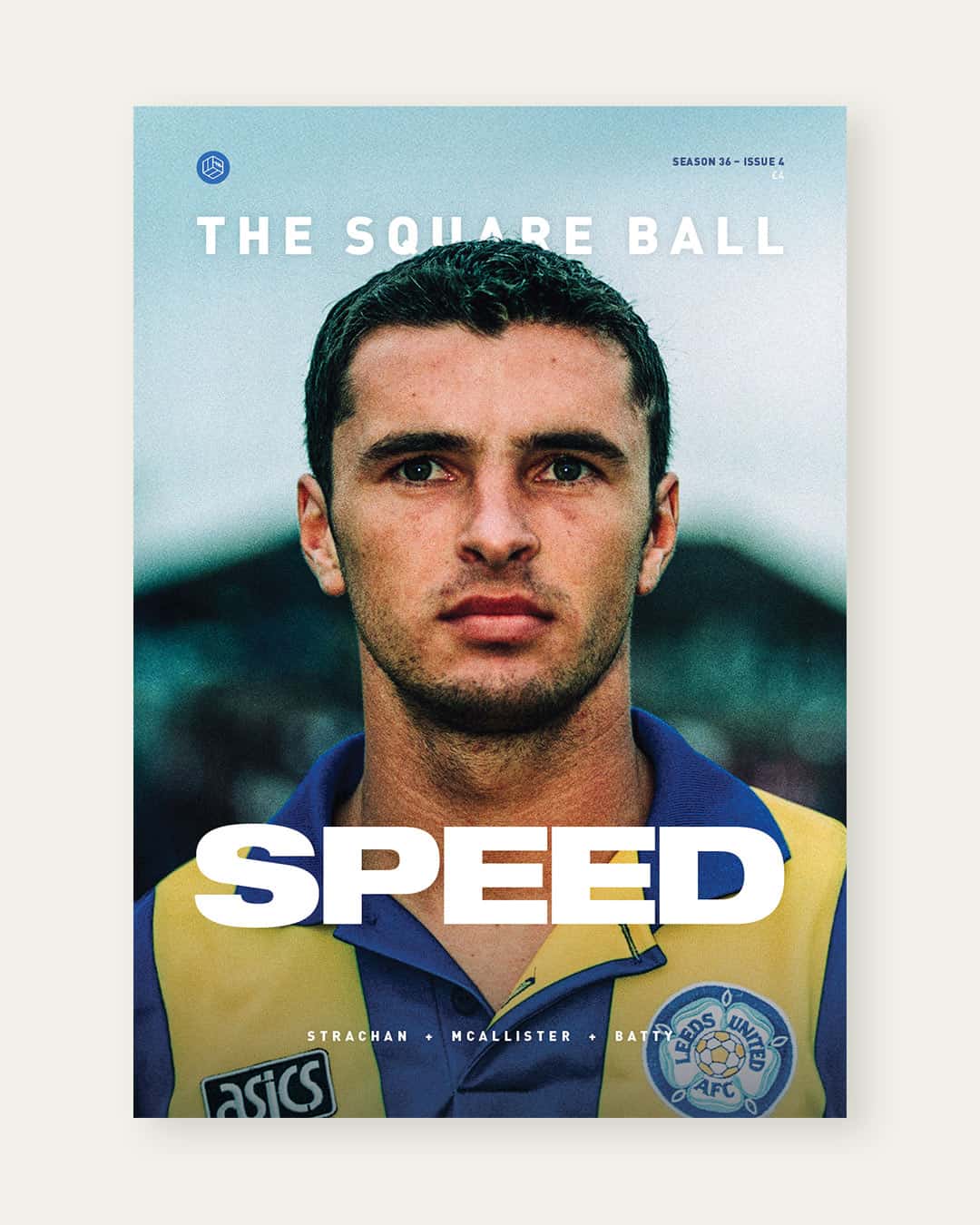
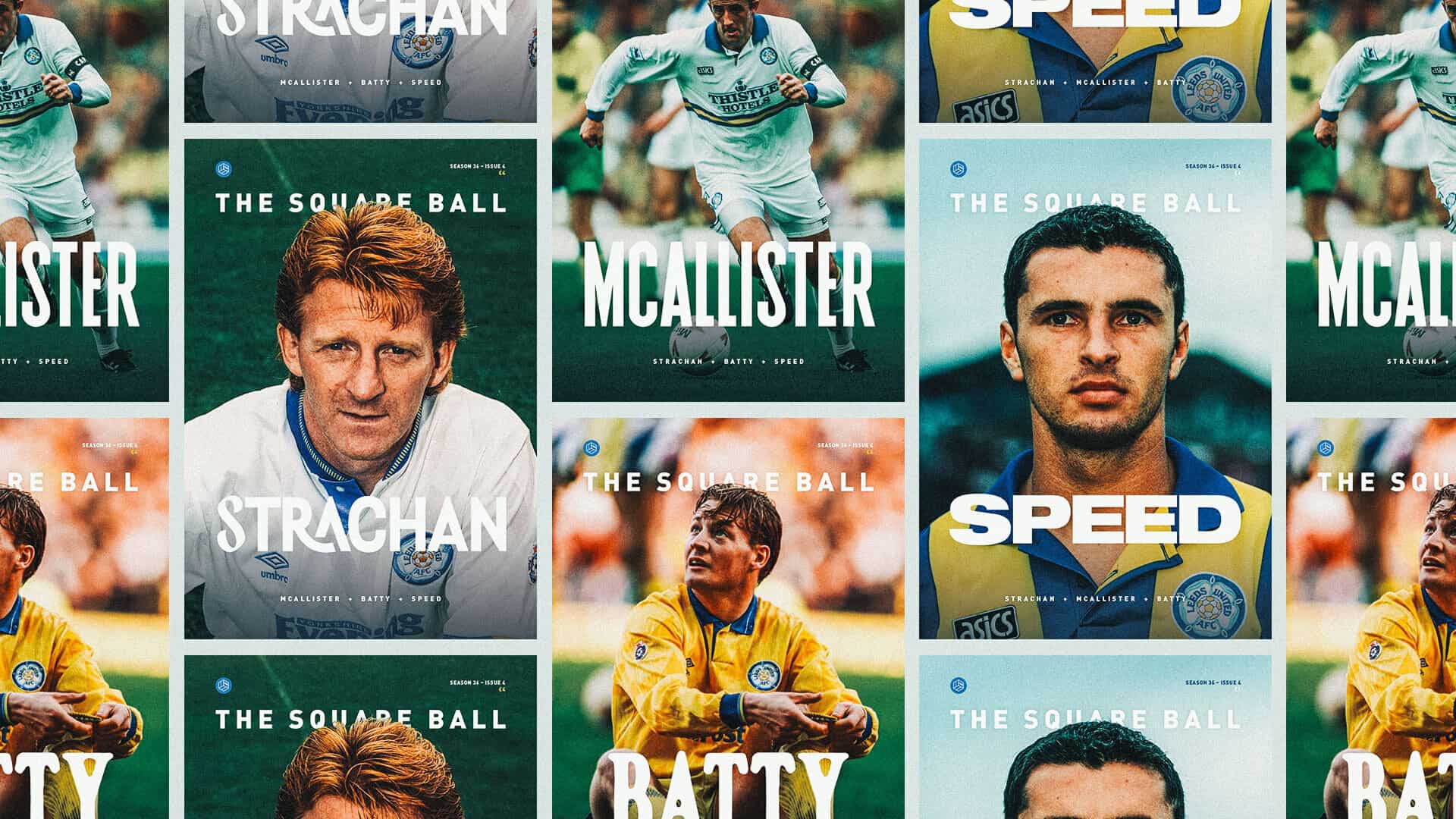
This article is free to read from issue four of The Square Ball magazine, a mini-special celebrating our title-winning midfield of Gordon Strachan, Gary McAllister, David Batty and Gary Speed. Four heroes, four covers, all for just four quid.
£19.99
£3.00
£35.00