Limited Time Discount! Shop NOW!
Howard Wilkinson took one look at Leeds United in December 1992 and decided that a change was as good as a rest. The reigning champions of England were 18th in the newly founded Premier League, having picked up only three points from eleven away matches all season. Sgt Wilko felt the perfect solution to their travelling yips was to go away to Italy, in the middle of a gameweek in early January.
Wilkinson felt that Florence, city of the Renaissance, might just be the place for his players to rediscover what made them the best team in the country the previous season. They weren’t there to study the paintings in the Uffizi Gallery, nor stare awkwardly at the statue of David, but to take part in the allegedly prestigious Trofeo Kenwood, which doesn’t need translating. The allure of facing both Fiorentina and Inter Milan encouraged Leeds to drag their full squad to Tuscany for two 45-minute matches on a Wednesday night. Being paid £200,000 to appear in a tournament backed by kettle and toaster sellers from Hampshire had nothing to do with it.
Trofeo Kenwood was marketed as Torneo di Capodanno — New Year’s Tournament. A previous edition in 1981 involved sixteen Serie A sides and was introduced to give fans some football while the Italian national team took part in the Mundialito, organised to celebrate fifty years of the World Cup.
Fans and players protested against the Torneo di Capodanno. Juventus and Torino both asked to play away from home to avoid having to open their stadium. Fiorentina fans travelled to Pistoiese for a riot and didn’t even make it to the match and, for comedic effect, the final was postponed and played in June.
The 1993 quasi-reboot involved only three teams in town for a one night stand, with Leeds providing an international twist. Coming up against Inter and Fiorentina, the Peacocks had two bona fide European footballing sides to contend with. Inter had won Serie A and the UEFA Cup in recent years with an array of superstars both foreign and domestic at their disposal. They faced Leeds in the first game with Ruben Sosa and Darko Pancev in attack, alongside disillusioned future Ballon d’Or winner Matthias Sammer in one of his final appearances before returning to Germany with Borussia Dortmund.
An almost empty Stadio Artemio Franchi chose to entertain itself by booing every touch of ex-player Nicola Berti in the Inter midfield and shouting olé every time a Leeds team with no natural wide players completed a pass. Evidently getting into the continental spirit, Wilko was sporting a beret and set Leeds up in an Italian-inspired 3-4-3 with the unique central midfield combination of Steve Hodge and aging centre-forward Imre Varadi, who was tasked with marking Sammer.
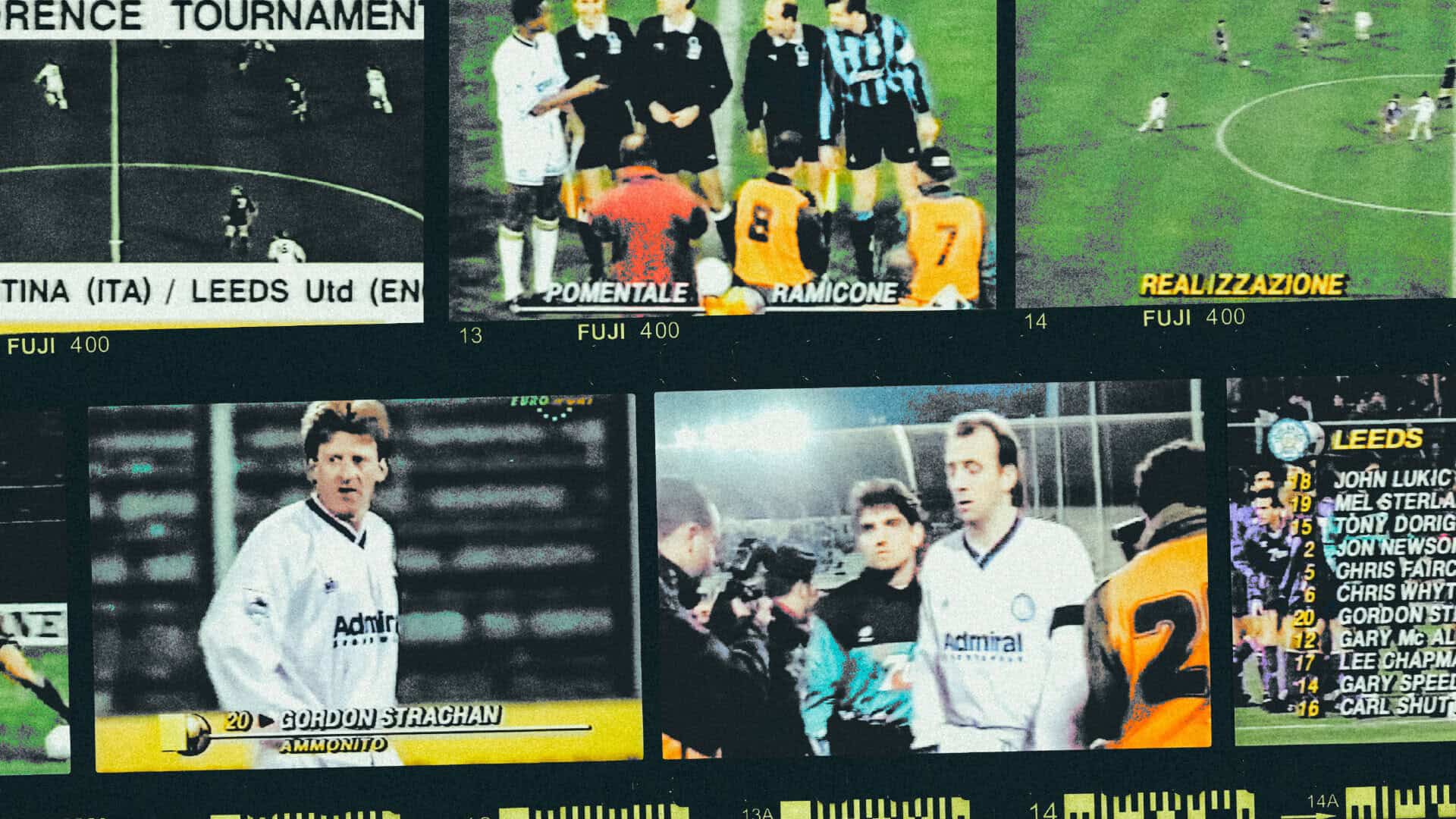
Eurosport had acquired the UK TV rights and the minimal subscribers they had were treated to the iconic Archie Macpherson’s polished presentation. The Italian broadcaster Mediaset — the propaganda machine of soon-to-become Prime Minister Silvio Berlusconi — was somewhat more chaotic. They had the foresight to realise that this would be a low-key affair and, instead, saw it as an opportunity to wedge as much in-game advertising as possible into the broadcast.
New Leeds striker Frank Strandli was flagged offside in the opening minutes and they cut to a shampoo advert while play stopped. Shortly after, Mervyn Day retrieved the ball for a goal kick while a cutscene showed Fiorentina players huddled around a TV in their full kit, with a totally natural looking Kenwood sponsor wall behind their heads, of course.
Berti opened the scoring for Inter after fifteen minutes with a classy finish after Sosa took a cross on his chest and laid it off for him. Shortly after, Day hoofed the ball up to a lonely Strandli, whose panicked attempt to trap the ball around four Inter defenders almost saw Macpherson break character. “Look at that… eh, totally outnumbered,” he said as Inter nicked the ball and lobbed it over the disjointed Leeds offside trap, where a lively Sosa fed Pancev to make it 2-0. Both celebrated like they’d just successfully moved a fridge, barely showing emotion and likely wondering why they couldn’t just have had a night off.
Both sides seemed content to avoid any major drama in the remaining 25 minutes, reducing the highlight-worthy moments to a crowd shot of Leeds director Bill Fotherby and Fiorentina president Mario Cecchi Gori sitting together in matching camel overcoats and trilby hats, as well as another shot of Leeds physio Alan Sutton looking perplexed as an Italian doctor silently observed him taping Steve Hodge’s calf.
Coverage was augmented using moody shots of the stadium’s complex architecture, with players traversing a winding staircase down to the pitch and various sightings of Wilko giving off at officials in the tunnel. Mediaset’s commentator made multiple references to John Charles throughout, in the same way a taxi driver might shout “George Best!” at me on a holiday abroad when I tell them where I’m from.
Leeds had an hour to digest their 2-0 defeat before taking to the pitch once again. Wilko introduced his big guns to take on Fiorentina, an enigmatic side with quality like Stefan Effenberg, Francesco Baiano and Gabriel Batistuta to call on. Into midfield came Gordon Strachan and both Garys — McAllister and Speed. Tony Dorigo and Mel Sterland played as wing-backs and Lee Chapman was sent on up front to relieve a flailing Strandli.
The changes made little impact as Baiano scored twice to put Leeds 2-0 down once again. Fiorentina were a club in the early stages of collapse, but still managed to put the English champions to the sword. President Cecchi Gori’s son, Vittorio, fired head coach Luigi Radice two days before the tournament, citing the team’s drop to 6th in Serie A as unacceptable. His replacement, Aldo Agroppi, was best known for coining the phrase: “Better two injured than one dead.” That is, to say, playing for a draw is better than risking a defeat.
Strachan capped off a forgettable night for the club, getting himself sent off for protesting a non-decision from referee Marcello Nicchi after Effenberg appeared to elbow the Leeds captain. Although Strachan could be classed as confrontational, to be polite, Nicchi had a reputation for bizarre decisions. Three years later, Bologna’s Kennet Andersson was shown a straight red card by Nicchi for ‘dissent’ having asked his manager to substitute him after picking up a knock. Nicchi was retired shortly after but failed upwards, serving as head of AIA, the Italian refereeing association, for twelve years until 2021.
His red card for Strachan was about the only thing that caught the attention of the English press, who pondered whether a ban might apply to the upcoming Premier League match against Southampton. At the risk of speaking on Leeds’ behalf, I can only imagine they pointed out that it wasn’t even a full match being played. They weren’t exactly handing out commemorative caps or appearance bonuses for 45 minutes in the freezing Florentine winter.
Back on Eurosport, Macpherson continued his commentary as Fiorentina squeaked past Inter to win what should have been a sterling silver toaster. Batistuta’s winning penalty prompted mild celebrations from the unenthused thousands sitting in the ultras section of Curva Fiesole. “Four goals conceded on the night and a man sent off,” Macpherson said. “But having said that, Leeds leave here £200,000 richer. And it is all about money these days.”
He wasn’t wrong. Leeds weren’t going to recapture their form against an in-form Inter or Gabriel Batistuta. The cash pocketed likely paid for Strandli, the much sought after £250,000 striker who left five months later. The Scandinavian Matthias Sammer, nobody was calling him.
Leeds conspired to finish 17th in the Premier League, saved from relegation by their home form after winning only once on the road all season. Fiorentina won only twice in the second half of their season and were relegated, despite sitting 2nd in mid-December. Both clubs went bankrupt in the early 2000s, so perhaps the two men in camel coats shared more than sartorial similarities on that cold night in Florence. ⬢
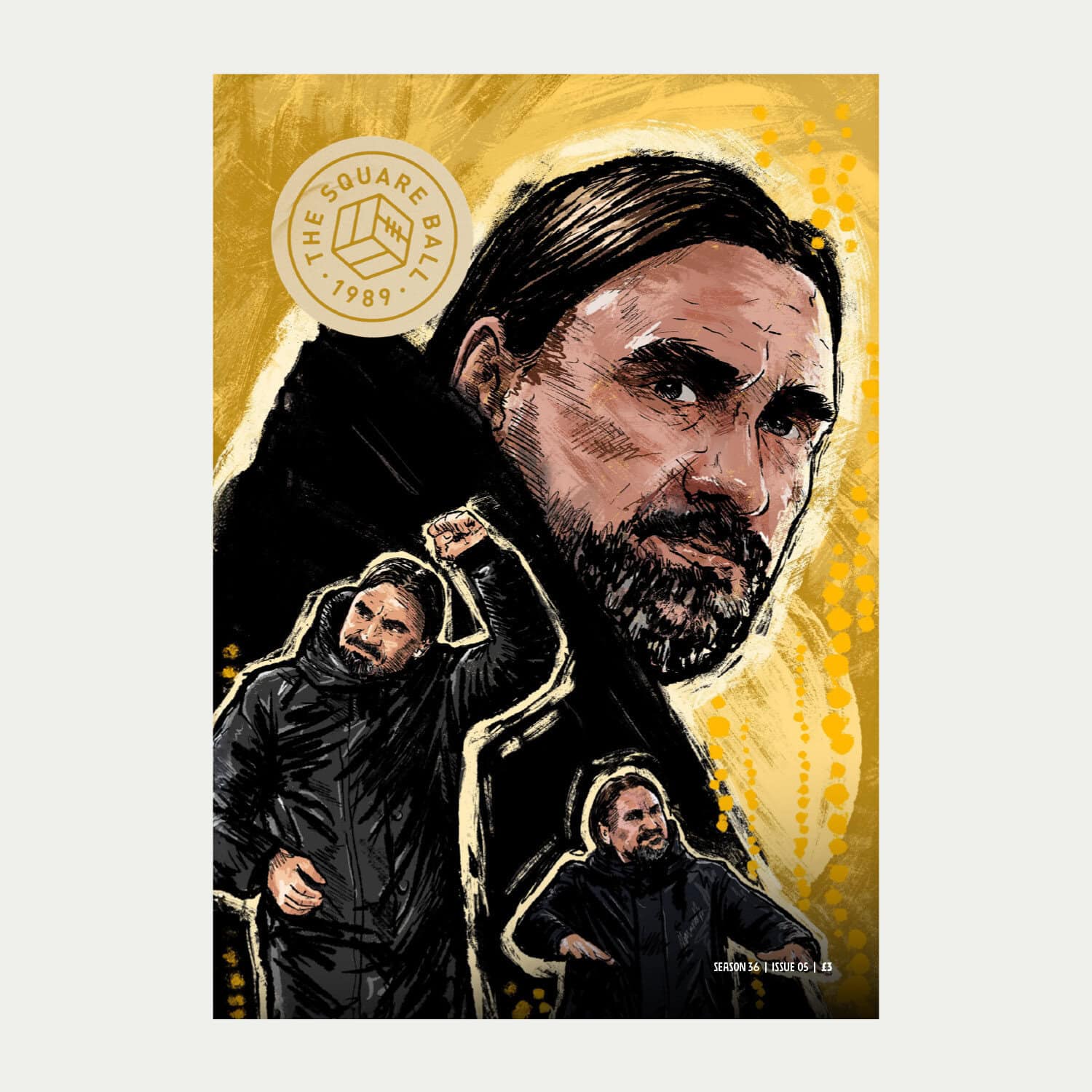
This article is free to read from issue five of The Square Ball magazine. Get your copy here.