Limited Time Discount! Shop NOW!
At the end of the road, there is a mountain. Gravel and dust tracks curve into tarmac, spiralling around valleys and towns hidden underneath its big pointy shadow. Everybody walks this road. Most never make it so far, the journey simply too tough to be arsed. They’ll stop off, at Barrow maybe. It’s alright, nobody really hates Barrow, but you’ve got Paris only a few miles away. If, and only if, you’re one of few with the strength, courage and sovereign wealth to scale this rocky beast, you might just be lucky enough to catch a glimpse. Because at the peak of the mountain Leeds United are scaling along, sits Daddy Gianni Infantino on his little golden throne.
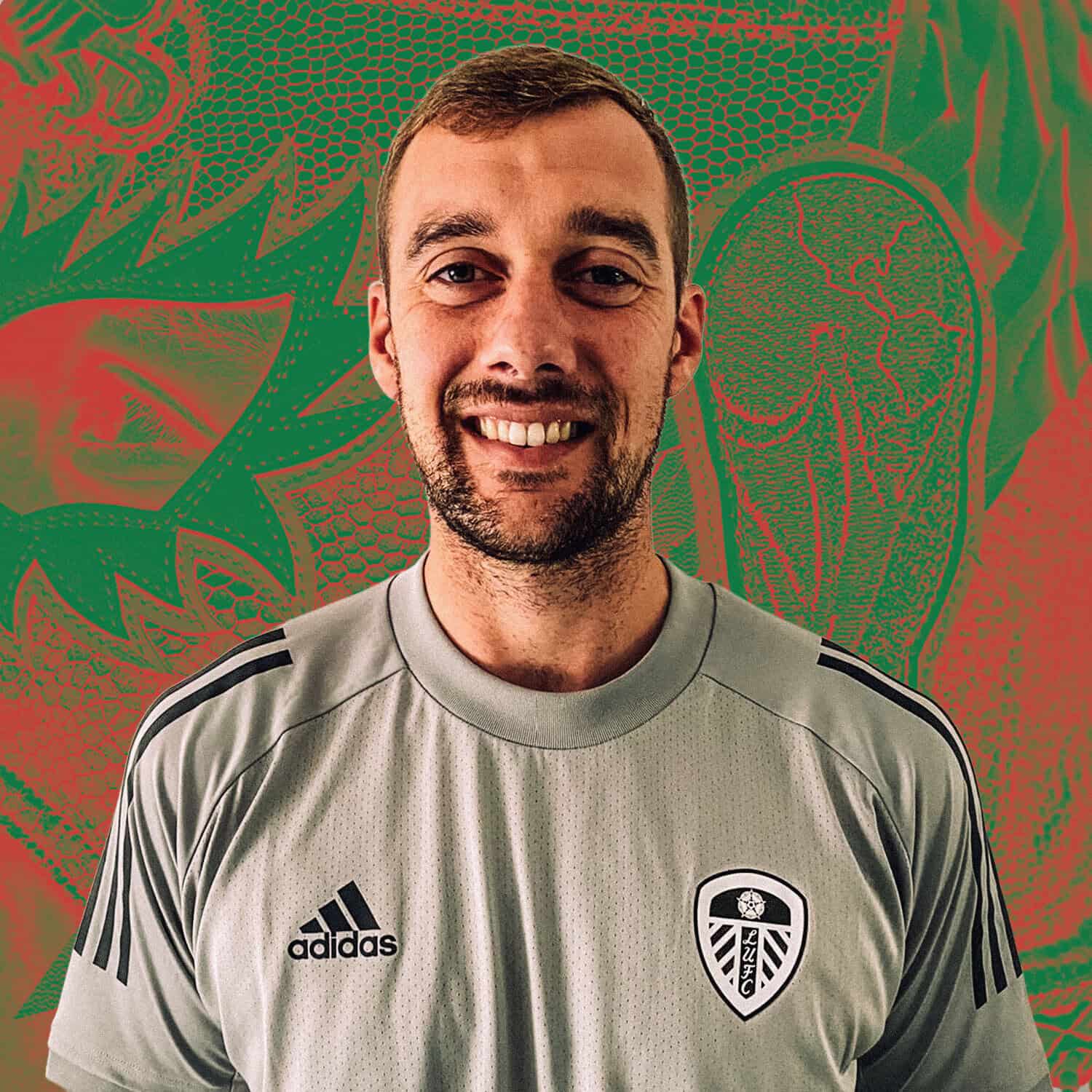
Matt Noble is a man from York who made the correct decision. When coaching some little fellas in the Viking land, ex-Leeds youth coach Gordon Stanniforth asked 18-year-old Matt if he wanted to move to Mexico and coach some little Mexican fellas instead. Obviously, the answer was yes.
“I got the opportunity to go to Mexico and I thought, ‘Well, yeah, I wouldn’t mind a bit of that,’” he says. “I started coaching with an academy that was hiring foreigners to coach the local kids, that got a little bit big and became officiated with West Ham. Obviously, I didn’t realise ten months would turn into twelve years. Now I’m working as a PE teacher at one of the British international schools out here.”
When Matt left York for Yucatán, Leeds had appointed Neil Warnock after a season of finishing, probably, 15th in the Championship. The Whites were safe from the threat of relegation, thanks mostly to Luciano Becchio, but were as close to danger as Epstein’s cleaner.
“I was in Mexico with two Huddersfield fans and at the time they were better than us. I kept saying, ‘We’ll come back one day and you’ll soon find out!’ And lo and behold it happened – seven years after. People had moved on and I’m still sat on WhatsApp like, ‘I told you so!’”
What he’d told them, of course, was that Leeds would soon be back on the world stage. “When Bielsa took over I was in Mexico, and all the Mexican nationals knew who he was, not just because of managing there but what he did with Chile and Argentina as well. There were coaches that I was with, from here, and they knew exactly who he was and what he’d do for Leeds. One of them said, ‘I give you three years until you’re in the Premier League.’”
Given the revolution that Marcelo Bielsa brought to both the city and the football club, it’s no surprise his success would’ve translated across the world. Leeds, back at the turn of the millennia, were not only a good football team. They were a marketable asset, with a young squad of some local lads blended in with blokes, like Lucas Radebe for example, from as far as football could reach. If the club couldn’t get the rest of the world coming to Leeds, Leeds had to go to the rest of the world.
“When I first came over, people had heard of us from the early 2000s with the Champions League. As the years went on and we were further and further away from the Premier League, people would say they knew Leeds United, but I’m thinking, ‘Do you?’
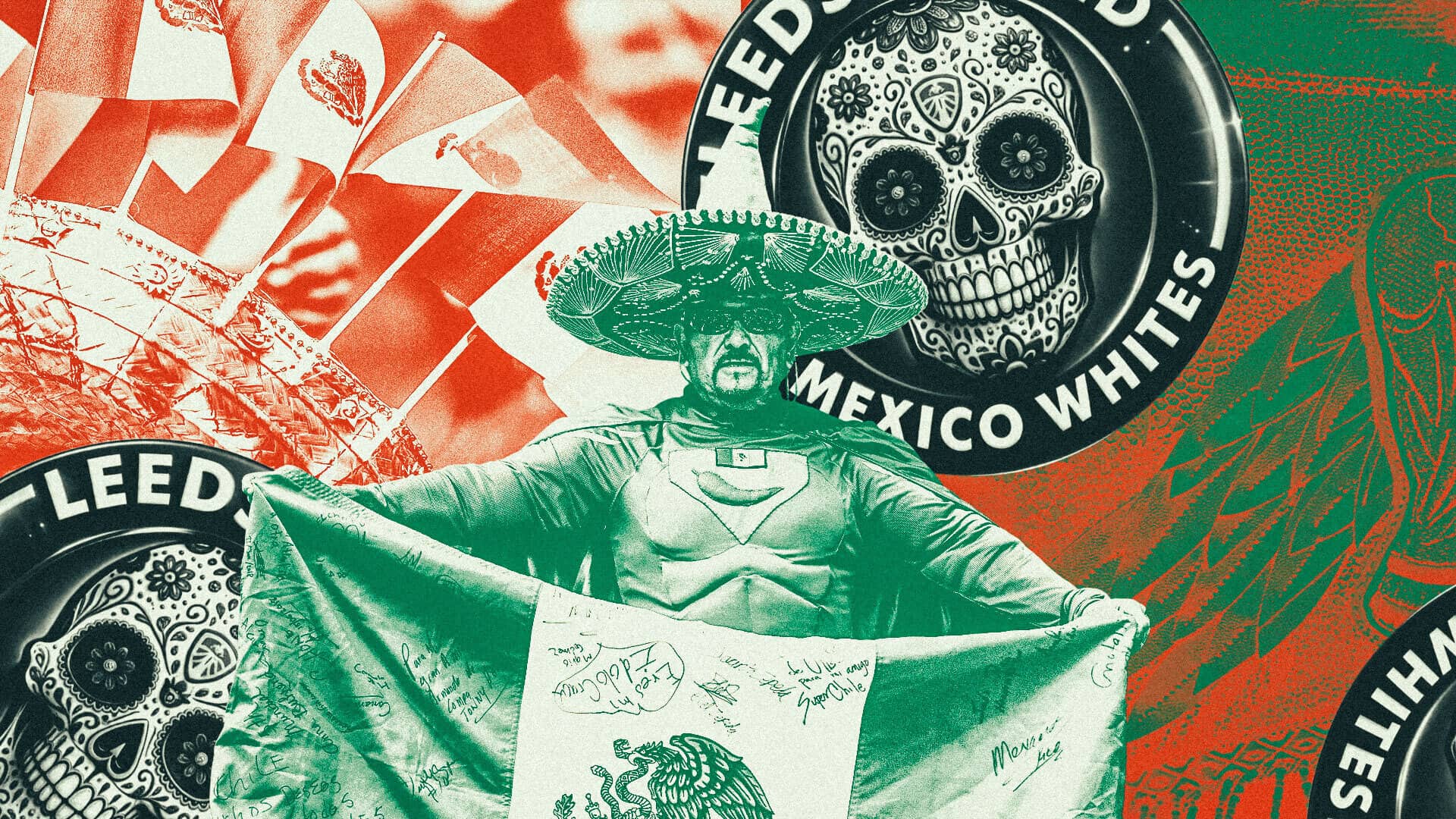
“Over the past six years, since we were promoted the first time round, there’s a hell of a lot more people knowing who we are. Now, in Mexico, there’s a group of us.” The Mexico Whites, that is. “Knowing that there’s other Leeds fans in Mexico shows how mental the fanbase is. Of course, you get the Madrid and Man City fans, but knowing — as low as we got — we’re still massive.”
A recent acceleration of commercialisation surrounding Leeds United has left many people, myself included, feeling quite unsure about the future of the club. As Elland Road expands to accommodate more tourists and hike up ticket prices for regular matchgoers, there’s a finely poised sweet spot where the stadium refurbishment must land. The current ownership are modernising the club at a point in its evolution when it so desperately needs to happen, given the exponential growth of teams around us, but losing that sense of locality seems inevitable to merge us with the rest of the Premier League product. That’s not considering the big red logo with a bull on it, not associated at all to the sports drink, but even details like the club shifting up Adidas’ kit tier ranking, allowing a wider global reach and more personalised clobber. It can be difficult, personally, to vividly understand the benefits of these things when living and working on the doorstep of Elland Road, as though we’re too close to the paintbrush to see the bigger picture.
“Last season a Newcastle shirt suddenly appeared in the Adidas stores over here,” Matt says. “Hopefully I see a Leeds shirt. In the US there’s so many different fan groups, in every state, and we’re all begging for Leeds to get the shirts out there. Now, moving up the tiers, hopefully we can get there.”
Yet, of course, these things come with a price. Progress costs, as they say (they don’t, but I’m trying to sound inquisitive and wise). If Leeds are to aim for the top, there’s no better example of our future than the tip of the mountain.
The World Cup 2026, hosted between Mexico, Canada and the US – in order to rig the vote in favour of Saudi Arabia 2034 – has been, on the pitch, a success so far. Aside from the advert breaks, TV channels showing Gianni every four minutes, political upset, and more advert breaks, it seems to be going quite well for Donald Trump and his little bald friend. Gabi Gudmundsson has won 5-1 and lost 5-1 and Crysencio Summerville is enjoying the attention before he leaves West Ham for a Champions League team later this summer. Marcelo Bielsa doesn’t seem to be enjoying it quite so much, foreseeing the direction that FIFA, and therefore football in general, is heading towards. On the new hydration breaks, Bielsa said, “Before this decision, football had one characteristic; now it has another. People fall in love with the game because of its characteristics — playing four halves instead of two alters the conception that had been culturally constructed to interpret football.”
That cultural construction is something that the US is trying desperately hard to produce, as FIFA mandate another World Cup – including Qatar and Saudi Arabia – in a country that doesn’t have a distinct footballing identity, opting instead for finding the biggest market available. If only there was a country, perhaps hosting one third of the tournament, that has this football culture.
“The Mexican people truly believe that they could host the whole thing themselves,” Matt says. “And they truly believe that, if they did, the pricing wouldn’t be like it is. People are being denied visas and stuff, but with Mexico they’re open arms. They’ll let you in and treat you as one of their own. They truly, truly believe they could host it themselves, like they have done in the previous two times that it’s been here.
“As you can imagine, Donald Trump’s not big over here. Now, the whole world sees FIFA as we all thought they were – corrupted. They think about the money and don’t think about the actual game itself, that’s totally gone out the window, and you can tell with this World Cup because of the pricing. Of everything, not just tickets. I don’t expect that the tickets would’ve been this expensive if it was just held here, but as Mexico, Canada and the US are holding it together, the ticket pricing has to be the same. But you can’t get the working class to games like it was the other times it was hosted in Mexico.
“Going to the Trump and FIFA situation, they don’t care about us football fans, just the payslip in their back pocket. Look at the Club World Cup, Donald Trump celebrating the trophy lift with Chelsea. FIFA have now announced he’ll be involved with the World Cup-winning team, too. In what mindset is that football?”
On the fans that can make it to the World Cup, Matt says, “It’s that top 1%. Either they work for companies that get free tickets, corporate types, or there are a lot of people that save up every four years and don’t go to anything else. It was $2,300 for the last Mexico game (against South Korea) and that’s up in the gods near enough. For me, I just can’t justify that. It means a lot this time around because it’s North America, and my old man did 1994 in the US, so he’s done a North American World Cup. If I could’ve got to a game, we would’ve had something else in common. It’s gutting.”
Because when football loses the ability to be seen by people who truly care, it loses the driving force of the product. Okay, okay, football without fans is nothing, yes. Everyone sane is well aware of this fact. Take a moment, then, to consider yourself as a Leeds fan. Even to keep yourself happy, in your wildest dreams, think of what it is you would hope for. It’s star players, beautiful kits, an identity and magnitude to your team that can compete with anyone across the world. It’s European night trips and Ryanair flight risks filled with hundreds of pissed up others going to terrorise some tiny Latvian town with full-arsed Leedsyness. Consider, then, how that all becomes possible.
It’s refreshing to see, even if still political in its very nature, someone with power voting with their feet. The Mexican President, Claudia Sheinbaum, was offered a free ticket to the World Cup opener in Mexico City, where her country beat South Africa 2-0. Sheinbaum opted instead to give the ticket away free of charge to any young woman who entered the contest. The winner was Yolett Cervantes Cuaquehua, a 21-year-old indigenous Nahua athlete from Veracruz, who beat one thousand other finalists from across Mexico with a video of herself doing kick ups in a traditional dress. The President watched the game in one of the government sanctioned viewing parties, alongside hundreds of locals.
“The government in charge now focus on the working class and poorer backgrounds, so her taking that stance is gaining support, it’s another political thing again. But, for me it was a big middle finger up to FIFA. Having the opening game of the World Cup in Mexico and you don’t have the president there, it’s massive.”
It’s easy to imagine a dimension where Ken Bates charges Cuaquehua £600 for the ticket and tells her to take her hat off, but Leeds’ current ownership are doing lots of things right. Football is tracked along a constantly shifting axis and nothing in sport is ever linear, but the tides are unequivocally flowing in the right direction. This direction brings profit, success and sustainability to a football club that has been short of reassurance since back when people in Mexico would know who we are. It’s a shame, then, that the mountain has moved so far since we were at the top of it. As things look up for Leeds, it’s ever more difficult to escape the feeling that we’re rushing down a road to nowhere. ⬢
£15.00