Limited Time Discount! Shop NOW!
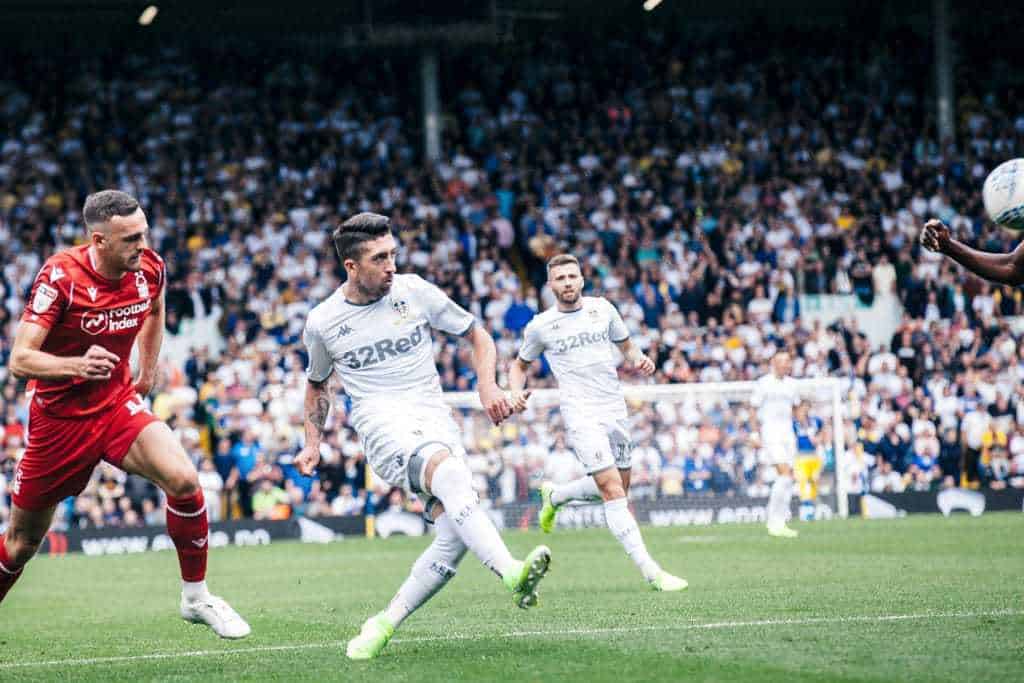
As Andrea Radrizzani and Victor Orta looked at the changes planned for Thorp Arch in summer 2018, they must have wondered what was going on.
Over here, the pigeon lofts. There, a vegetable patch. In one secluded corner, a locked shed with a kestrel inside. As Paul Heckingbottom explained the changes to the players’ diets, recommending his preferred supplier of bread and dripping, they realised that changing Leeds United’s coach wasn’t going to be enough. They had to change the culture.
And the culture has changed. Everyone associated with Leeds now does things every day they didn’t think of doing eighteen months ago, before Marcelo Bielsa came to Wetherby. The players perform brilliantly every week, something that didn’t seem to have occurred to them before. The coaching staff work afternoons with unprecedented intensity. The fans turn up to games expecting to see Leeds win. In big ways and small ways, Marcelo Bielsa has changed Leeds United.
We look in wonder at the transformation of Kalvin Phillips as the symbol of it all, but that has been easy when compared to the changes Bielsa has tried to make to those of us who are looking. Leeds fans have new habits, tuning in to watch Bielsa’s press conference every week and analysing his formations and ideas. But without being embedded in the boot camp at Thorp Arch, what we hear in those press conferences is hard to absorb when, as soon as the stream goes dark, we’re returned to the social media debates consuming football fans everywhere outside of Bielsa’s control.
(Prefer this as a podcast? Click here to support Moscowhite on Patreon.)
If it was up to Marcelo Bielsa, Mauricio Pochettino would still be the manager of Tottenham Hotspur. Not just because he’s loved Poch since the night he squeezed his teenage legs while he slept and felt a footballer, and through everything they achieved together for Newell’s Old Boys and Argentina. But Bielsa believes Pochettino should still be in post because Pochettino’s management of Spurs has exemplified his own beliefs. Spurs might not have won the Champions League, or anything, but:
“…the team that played the final of the Champions League was a team he built very carefully. The performance of this team was due to the collective play built between him and his players, rather than top players being bought. They didn’t buy top players for him to achieve this.”
It’s an old Bielsa trope: that the ‘nobility of the resources used’ must be taken into account when judging success. Pochettino didn’t win the Champions League, but he transformed Spurs into a team capable of winning it, and that meant the fans had week after week of watching one of the best teams in Europe playing exhilarating and usually winning football. But in the end, not winning the Champions League final put events into motion that removed the manager who built the best team Spurs had for years.
One day Spurs fans will look back on that side and cherish it; perhaps as soon as they see what Jose Mourinho will wreak. The Champions League is supposed to be the hardest club competition to win, so the latter stages in particular benefit from being appreciated without putting victory above all else; we’re watching excellent teams playing, hopefully, brilliant football matches. Winning the tournament is so unlikely that you have to take what pleasure you can from the journey.
Leeds fans know this. Even in 2001 the bitterness of losing the semi-final to Valencia, that Alan Smith put into his last minute red card, was soon forgotten. We had better memories: Deportivo at Elland Road, Anderlecht away, beating Besiktas 6-0; Barcelona at home, as good as a win; Milan at home, a win but somehow better. And then there was Milan away.
The San Siro is still the one, almost twenty years later, and we didn’t even win there. Dominic Matteo, scouse to the core, is now a former Leeds captain fighting a brain tumour in a Leeds hospital and being supported by Leeds fans, and a large part of all that is because his header secured a point in the Champions League group stages in November 2000. We didn’t get a trophy, and Milan still won the group above us; we didn’t actually win anything. But it mattered to us enough that we’ve never forgotten that glorious, futile moment, and the roof will come off Elland Road when Matteo is back to share it with us again.
We went to visit Paul Trevillion this week, for The Square Ball Podcast; the Master of Movement, the Leonardo of Line, the sport artist who used pre-match warm ups, named tracksuits, sock tags and a hit record — the b-side became quite popular, as Marching on Together — to make sure that when Leeds United went to the FA Cup final in 1972 people weren’t talking about Dirty Leeds, but Super Leeds.
Trevillion grew up in the 1930s as a Spurs fan living across the street from White Hart Lane. But he loves Everton, because he saw Dixie Dean score for them against Spurs, and remembers how the whole crowd roared; you couldn’t see a great of the game like Dean on the television, then, or travel easily to see them in person, and fans wanted the experience of seeing Dixie score, even if it was against their team.
So Spurs and Everton, and Trevillion loves Leeds to the bone after all the work he did with Don Revie’s team and the way he was accepted in the city; while during Arsene Wenger’s reign he loved going to watch Arsenal. That’s blasphemy for a Spurs fan, but Trevillion couldn’t resist the way they played.
It’s about love of football. Trevillion can compare Dixie Dean, Allan Clarke and Harry Kane; Tom Finney, Eddie Gray and Lionel Messi; he’s seen them, drawn them, admired them. List the names and the memories and it starts to make tribalism in football seem a bit silly. How many times in the last decade did I decide not to turn on the TV on a Saturday evening and watch Barcelona play in La Liga, because an afternoon of watching Steve Morison, Luke Varney and Scott Wootton turn out for my beloved Leeds United had left me too exhausted to watch another ball being kicked? And I say ‘turn out’ deliberately, because what I watched during those years could hardly be compared to the way Lionel Messi was playing.
At Leeds in 1972, Trevillion was desperate for them to win the FA Cup — not the league or a European trophy, the FA Cup. They’d lost two FA Cup finals already, and it was the one medal that Jack Charlton, coming to the end of his career, didn’t have. This week Trevillion said something about it that, when I heard it, clarified and illuminated Bielsa’s approach to football, with the same succinct brilliance Trevillion brings to drawing.
“Trophies and medals,” he said, “They’re for the players. The players get the rewards. It’s what they work hard for every day.”
What do the fans get? We get to watch them try. And rather than a medal or a cup to take home, our reward comes by appreciating the brilliance that we see. Who can doubt that someone who has seen Tom Finney, Eddie Gray and Lionel Messi has been rewarded in a way any football fan should relish, even more than a lifted cup?
At some point tribalism, bragging rights and reflected glory have created a win-at-all-costs culture that obscures the art of the game, relegates moments like Matteo in the San Siro to meaningless, declares seasons like Tottenham have enjoyed as pointless. Bielsa talked about this last season.
“I think that the commercialisation of football, when the clubs are owned by private people, means that now the result is more important than anything,” he said. “But the most attractive thing in football is the beauty of the game.”
We put all the emphasis on winning, but a league championship is given after the games are over, a cup final is one game out of an entire season of fifty, maybe sixty. What are we, as fans, doing the rest of the time, during all the games that aren’t cup finals, all the days that aren’t spent watching an open-top bus?
Taking pleasure in the beauty of the game does not mean not winning. The next stage of Bielsa’s philosophy is that, if you consistently play the game beautifully and well, you are much more likely to achieve a goal, a win, a title, a cup. But you can’t guarantee a victory the way you can guarantee good football; you can train a team to play better than any other in the division, but you can’t train a striker to score every chance. All you can do is work hard at beauty, and trust the rest will follow.
That’s a hard cultural adjustment to make against a backdrop where Pochettino is being replaced by Jose Mourinho, and when Leeds United have so much at stake this season. A lot of fans would be happy if they woke up tomorrow and the season was over, and Leeds had won the league. But desperation has robbed us of so much over the last twenty years, we should be careful not to let our desperation for promotion steal the joy of watching the best team we’ve had for many, many seasons.
Pablo Hernandez has been given a new two-year contract, and in some quarters that’s seen as too long, that he’s being paid too much, that his age and cost might somehow prevent the team from achieving something. Perhaps it’s better to be glad that, however much it costs and however long it lasts, when we go to Elland Road we can watch a wonderful player play.
Whatever the final league table says, I won’t forget watching Hernandez’s pass to Stuart Dallas at Stoke this season, or his sixteen-second shot last season against West Brom. I won’t forget Dom Matteo getting a draw in Milan; I won’t forget Tony Yeboah’s acoustic eureka off the crossbar against Liverpool, in a season when Leeds finished 13th.
And I’ll try not to forget what Marcelo Bielsa and Paul Trevillion have taught me, to appreciate beauty while we can see it, and let medals, trophies and rewards settle where they may. ◉
(Read Moscowhite’s new book: 100 Years of Leeds United, 1919-2019.)
(Are you reading the BUFF? A daily email newsletter by Moscowhite for twenty pence a week. If you enjoy these reports, your money supports more: Click here to get your daily BUFF.)
(photo by Lee Brown)
£3.00
£19.99
£3.00